
The Great American Water Pipeline That Isn’t
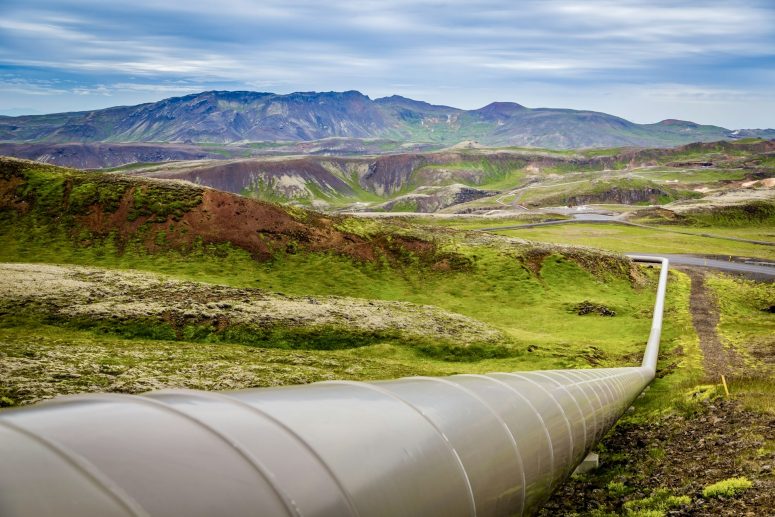
Courtesy Unsplash
For decades, America’s thirst for bold engineering solutions has rivaled its appetite for big ideas. If we could move oil, gas, and data across continents, why not water?
Today, with the Colorado River and other Western water sources stressed by longtime drought and climate change, a recurring concept occasionally resurfaces in policy circles and social commentary: the notion of building a massive pipeline to transport freshwater from the water-rich Mississippi River Basin to the parched West.
But despite periodic buzz, this Great American Water Pipeline remains essentially a pipe dream — one lacking political support, economic viability, and practical feasibility. This report explores why that is, and what the real landscape looks like for water delivery and drought mitigation in the 21st-century United States.
Introduction: A Water Crisis with No Easy Fix
The Western United States — from Arizona and Nevada to California and Utah — has faced persistent drought conditions for more than two decades. Reservoirs like Lake Powell and Lake Mead, fed by the Colorado River, have dropped to historically low levels, putting pressure on cities, farms, and hydropower operations. Meanwhile, population growth and economic development continue apace. In this context, ambitious solutions get floated in public discourse: giant water pipelines, transcontinental canals, even atmospheric water harvesting schemes. Some are ambitious engineering fantasies, others sincere proposals; most fall somewhere in between. None have moved beyond headlines into serious construction.
One idea that periodically resurfaces is diverting water from the Mississippi — the largest river system in North America — to the West. The question is not whether the concept has been suggested (it has), but whether it’s realistic. Following are the key technical, political, economic, and environmental facets of this question.
How Big Would a Continental Pipeline Need to Be?
Proponents envision a pipeline or aqueduct that would carry freshwater thousands of miles westward — perhaps from the Mississippi or its tributaries — to fill depleted reservoirs, augment municipal supplies, and relieve agricultural stress. But the scale and engineering challenges are staggering.
For context: A technical review of large-scale water diversion proposals concluded that such a pipeline would need to be massive — around 88 feet in diameter if built as a pipe, or require a canal roughly 100 feet wide and 60 feet deep — just to deliver a meaningful volume of water.
The elevation changes involved in crossing the Continental Divide and Rocky Mountains would require enormous pumping power. One analysis suggested that simply powering the pumps could require energy capacity equivalent to 5.5 times the output of Georgia’s Plant Vogtle nuclear facility — which itself costs tens of billions of dollars.
Preliminary estimates from U.S. Department of the Interior studies — some dating back to 2012 — suggested construction alone could cost in the tens of billions (or more) and take 30+ years to complete.
Put simply: the physical scale is greater than anything the U.S. water delivery system has ever undertaken.
Political Hurdles, State Rights, and River Basins
Even if the engineering could be managed and the funding assembled, the political obstacles are immense.
Water rights in the U.S. are governed by a complex patchwork of local, state, and federal laws. The Mississippi River itself spans multiple states and is subject to interstate agreements and compacts. Cities and industries along the river depend on its flow for drinking water, commerce, and navigation. Groups representing municipalities along the Mississippi have expressed concerns about diverting water to other regions, pointing out that reducing flow could imperil ecosystems, shipping, and local economies.
The Colorado River basin — even within the West — is already governed by a series of compacts and legal entitlements often described as the “Law of the River.” These apportion rights among basin states and to Mexico. Introducing a new, massive external water input would likely require renegotiations of legal frameworks that have been contentious for decades.
Moreover, under current legal regimes, states like Missouri have even moved to restrict exports of water beyond a certain distance without permits — a clear reaction to fears about out-of-state water diversion.
This makes any proposed trans-continental water export not merely an engineering project, but a diplomatic and legal minefield.
Environmental and Hydrological Consequences
The environmental costs of redistributing vast quantities of freshwater across basins are not fully understood, but they are potentially severe.
Altering the natural flow of the Mississippi could reduce sediment transport — crucial for coastal restoration and habitat maintenance in Louisiana and the Gulf.
Lower flows could increase pollutant concentrations and change water temperatures, affecting aquatic species.
Introducing water into Western aquifers or ecosystems where it doesn’t naturally occur — even if “clean” — could have unforeseen ecological impacts.
This isn’t simply hypothetical. Historical proposals for water diversions in the U.S. — such as the proposed Klamath Diversion in California — were ultimately shelved due to environmental and political pushback.
Economic Reality: Cost vs. Benefit
It might be tempting to frame a continental water pipeline as an investment in national resilience. But a clear-eyed economic analysis yields sobering figures:
Construction and energy costs alone could push into the hundreds of billions, if not more than a trillion dollars, once all factors — permitting, land acquisition, environmental mitigation, pumping energy, and maintenance — are accounted for.
The value of the water delivered — even at artificially high prices — is dwarfed by the costs required to transport it. Water in much of the West already trades at prices reflecting scarcity; shipping in water from thousands of miles away would add transportation costs far beyond its intrinsic value.
Some advocates contend that water shouldn’t be priced on markets but treated as a shared natural resource. Yet public finance constraints, competing budget demands (infrastructure, defense, healthcare), and political resistance to massive public works make a coast-to-coast aqueduct hard to justify in budgetary terms.
Additionally, an influx of subsidized water could depress investments in local solutions like recycling, conservation, and improved irrigation efficiency — all of which offer high returns on water saved per dollar spent.
Alternatives: Smarter, Smaller, Realistic Solutions
While the Great American Water Pipeline remains theoretical, there are numerous practical strategies being deployed or proposed that are more grounded and cost-efficient:
1. Local Storage and Management. Municipal water systems increasingly invest in aquifer storage and recovery systems, which store excess water underground for use during drought. For example, some utilities plan expansions to double storage capacity to buffer dry years.
2. Conservation and Recycling. Water recycling — treating wastewater for reuse in irrigation or industrial processes — reduces pressure on freshwater supplies and has been successfully adopted in many Western cities.
3. Desalination. While energy-intensive, desalination of seawater is increasingly viable in coastal areas and avoids interbasin transfers altogether.
4. Efficiency Improvements. Agricultural water use accounts for a large share of water withdrawals in the West. Investments in irrigation efficiency and crop selection can reduce demand while maintaining productivity.
Why Ideas of Water Pipelines Keep Resurfacing
If the technical, political, economic, and environmental obstacles are so great, why does the idea of a Great American Water Pipeline keep popping up?
Part of it is psychological: catastrophes and crises draw big ideas. A century ago, Americans built Hoover Dam and the Central Valley Project. Those projects shaped the modern West and created a sense that bold infrastructure can solve big problems.
Another factor is regional stress. When reservoirs drop, or snowpack forecasts come in low, the public and media start searching for big, singular solutions rather than a portfolio of incremental improvements.
Most importantly, the concept thrives in opinion pages and letters because it sounds like a solution that treats drought as a national issue, not a local one. But what seems simple (“just move water where it’s needed”) collides with the complexity of water law, ecology, geology, and federalism.
That’s not to say innovative ideas should be dismissed out of hand. Indeed, pie-in-the-sky proposals often catalyze serious debate. But conflating hopeful ideas with actionable policy obscures the work actually needed to adapt to a hotter, drier climate.
Case Studies in Regional Water Transfers
There are smaller-scale water transfer projects that illustrate how water can move across basins when needs are clear and the scale manageable:
The Roberts Tunnel in Colorado diverts water under the Continental Divide to serve growing Front Range cities — a 23-mile engineering feat completed in the 1960s that remains essential for Denver’s water supply.
Interbasin transfers within states like Arkansas’ Grand Prairie Area Demonstration Project illustrate how water can be redistributed to support agriculture and aquifer recharge.
These examples show that regionally scaled transfers, where legal arrangements and ecological impacts are negotiated and understood, can work. But they pale in comparison to a transcontinental infrastructure proposal.
In the absence of easy solutions, the public often gravitates to narratives that simplify complexity. Comments proclaiming that water could be shipped from the Mississippi to California quickly get shared, despite the lack of political traction or funding. Meanwhile, misinformation and half-baked commentary — especially on social platforms — can distort opinions about feasibility and impact.
Conclusion: A Vision Worth Discussing, But Not Yet Building
The idea of building a Great American Water Pipeline stretching from the Mississippi River to the drought-stricken West embodies the audacity of American engineering. On paper, such a project dramatizes our national capabilities and underscores the seriousness of the Western water crisis.
But careful analysis shows that the pipeline that isn’t will likely remain so — at least for now. The physical scale, costs, legal barriers, ecological risks, and political hurdles are all towering. Meanwhile, practical solutions — from conservation and recycling to local storage and desalination — offer more immediate, cost-effective relief.
Rather than chase a continental aqueduct, policymakers, water managers, and communities might better invest in resilient, diversified strategies that treat water scarcity as a challenge to be navigated thoughtfully — not simply diverted.—Blake Snow