
10 proven ways to feel better about yourself

Courtesy Unsplash
Backed by science and doctor recommended, here are 10 healthy ways to feel good about yourself. Continue reading…
Courtesy Unsplash
Backed by science and doctor recommended, here are 10 healthy ways to feel good about yourself. Continue reading…

Courtesy Lindsey Snow
1. No one feels “ready.” There’s no moment where you suddenly feel like an adult. You just keep doing things slightly scared and call it responsibility.
2. Your energy matters more than your time. Free time means nothing if you’re exhausted. Sleep, boundaries, and saying no are adult superpowers.
3. Money stress is about habits, not income. More money helps, but unmanaged money disappears fast. Small, boring habits beat big financial plans and pains.
4. Consistency beats motivation. You won’t feel motivated most days. The adults who “have it together” just show up anyway, usually imperfectly.
5. Relationships fade without effort. Friendships, family, and partnerships don’t maintain themselves. If not on your calendar, all will eventually die.
BONUS: Everyone else is winging it, too.

Portrait of Jesus courtesy ChatGPT
Although “most influential” is ridiculously subjective, these 10 individuals are often named by historians, scholars, and surveys for their lasting impact on culture, science, religion, and governance (rather than fame alone):

Getting rich in five years is one thing. But living richly involves a lot more than just money.
Indeed, many people are rich in cash but poor in assets, broke on time, impoverished in relationships, destitute in health, and underprivileged in experiences and ongoing education. Of course, the inverse is true too. Poor people can be rich in many other areas that matter.
What can each of us do, then, to ensure we’re living richly in most, if not all, major aspects of life, regardless of income? While I don’t have all the answers, this is what I know for sure: Continue reading…

Courtesy Unsplash
Although entertaining, Hollywood stereotypes are rarely accurate. For example:
1. Cowboys were exceptionally diverse. Around one in four cowboys were Black, and many others were Mexican, Indigenous, or of mixed heritage. The Hollywood image ignores this multicultural reality.
2. Gunfights were rare. The classic “high noon” duel was extremely rare. Most towns had strict gun control laws, including weapon checks when entering town. Dodge City, for example, had ordinances banning the carrying of firearms.
3. Towns were often safer than today. Despite their rowdy reputations, many Western towns had lower murder rates than modern cities. Tombstone, AZ, had fewer than 10 murders a year at its peak.
4. Stagecoach robberies were rare and often nonviolent. There were fewer than 10 major stagecoach robberies per year across the West during its peak. Most robbers avoided violence, opting for speed and efficiency. Continue reading…

Thanks for reading and sharing my latest articles:
Courtesy Unsplash
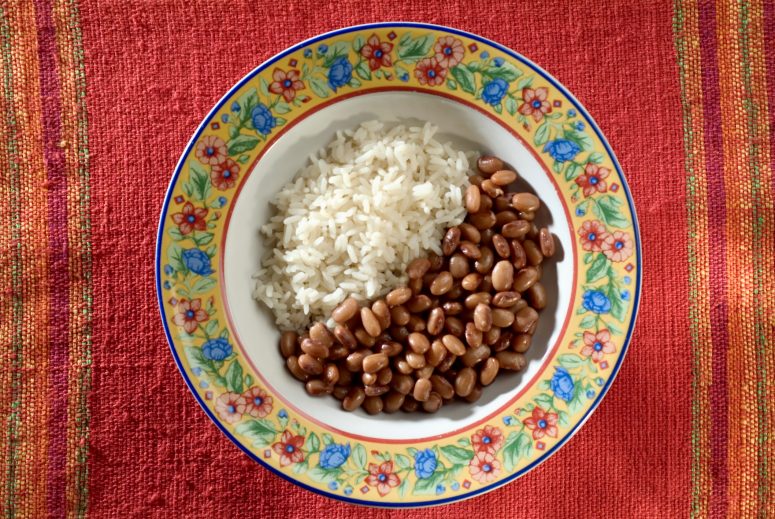
If pasta is Italy’s gift to the world, then beans and rice are America’s—quiet, comforting, and reliable.
I’ve eaten variations of this dish in at least five different countries. It’s big in Cuba. Beloved in Brazil. Found in Puerto Rican kitchens, Guatemalan comedores, and Southern soul food. You see, the soul of beans and rice transcends borders.
My first memory of it is from a missionary training center in São Paulo. No menu. Just one plate: beans and rice with a side of fried plantains and a thin cut of beef. Thought I was getting peasant food. I wasn’t wrong—but I also wasn’t ready for how satisfying it would be. Continue reading…

Courtesy Unsplash
My wife is taking and really enjoying her college business strategy course right now. Consequently, we’ve had a lot of stimulating conversations on clever strategies. This lead me down a rabbit hole of what I’ve successfully done in my own career as a business owner, as well as the most proven strategies in general for winning customers.
In my opinion, none are more timeless than these: Continue reading…

Courtesy Shutterstock
As I’ve written before, humans are incredibly intelligent and mind-numbingly ignorant when it comes to understanding our universe. As Bill Bryson so eloquently put it, human knowledge is “a mountain of theory built on a molehill of evidence.”
Again, humans are incredibly smart. But it’s amazing what we still don’t know. And there are no greater scientific mysteries than these. Continue reading…

The Meaning of Life: 13 Things I Learned from the World’s Greatest Thinkers. A deep synthesis of wisdom—from Plato to Viktor Frankl—on suffering, authenticity, and values.
3 Ways to Save Your Life (Motivational Speech). Reflections on deathbed regrets and how to live more purposefully right now.
5 Rules to Live By, According to a 101‑Year‑Old. Simple, timeless advice on joy, relationships, and staying grounded.

In a world that loves shiny new investments—crypto, NFTs, day trading, real estate flips—it’s easy to overlook the two most boring (and best) ways to build wealth: paying off debt and investing in index funds.
I get it. They’re not flashy. They won’t impress anyone at parties. But they work. Really well. Continue reading…

Courtesy Unsplash
The following habits are backed by science and proven mood boosters:
Go get ’em!
 My friend Wesley and I recently launched a startup called PowerSpace. It’s an employer-sponsored online class to help the surge of employees now working from home. We’re really excited about it.
But that’s not why I’m here today. I’m here to tell you we couldn’t have built what we did so far without the nearly two dozen people who agreed to help us refine our product, pricing, and overall market approach. And they did it all for free, just because we asked nicely.
This brilliant idea wasn’t mine, however. It was Wesley’s. Before starting this company, my definition of mentors went something like this: formal and stiff relationships that mostly college students form to help find a job.
Boy was I wrong. Turns out mentoring is a lot more effective when it’s done on an informal, individual, and case-by-case basis. Better yet, people are happy to share their perspective, feedback, and opinion—usually for free.
That said, free mentoring won’t make you a success. Only you can do that. But it can give you a leg up on what you need to do next, and it will certainly introduce you to a greater number of people who can put you in contact with even more smart people who can help.
Want to get started or have an idea or problem you need help with? Send an email to someone you respect and see what happens. In my experience, my response rate was over half. It works so well, I’m determined to use free mentoring on every big idea that crosses my desk now.
Thanks, Wesley. And thank you to the many people who have mentored me so far.

Courtesy Shutterstock
Saying less is actually more. It imbues your words with power.
That’s why filler words such as um, like, and kinda are so dilutionary and detrimental to the points, opinions, and conversations you’re having with others.
The good news is you can change — all of us can. Here’s how to delete filler words from your vocabulary permanently. Continue reading…

Thanks for reading and sharing my latest clippings:
 From The New Yorker:
“Public-housing projects with upgraded outdoor lighting experienced a 35 percent reduction in crime compared with those left as is. A well-lit space makes it easier for bystanders to see a confrontation unfold—and makes those involved a little more self-conscious.”
Would be cool to see governments spend more on lighting than prisons.

Thanks for listening and sharing with the music fans in your life. And thanks to my band The Breakers for recording it with me.

Regardless of population, these are the five most influential American cities in terms of national and international impact, including culture, economy, and politics. The majors, that is. Continue reading…

Courtesy Unsplash
Jesus taught, “Except ye become as little children, ye shall not enter the kingdom of heaven.” He emphasized this because grown-ups are often hostile, mean, and unforgiving. Here’s why: Continue reading…
SEE ALSO: Don’t aim for success. If you persist, it will find you.

To help you get the most out of your next trip, take these travel tested tips. Continue reading…

Courtesy Newfoundland Tourism
Thanks for reading and sharing my latest travel writing:

Courtesy Unsplash
Respect.
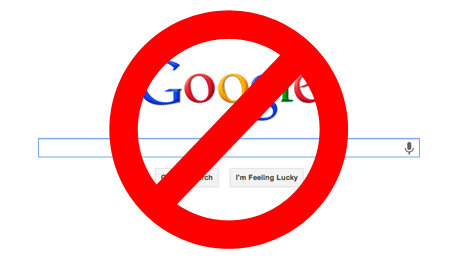
More specifically, ChatGPT (and less useful AI apps) can scan all 50 billion web pages and answer our detailed, specific, labor-intensive requests and questions in seconds—as opposed to just links.
Granted, we’re not Post-Google in the way we’re Post-MySpace or Post-BlackBerry. But we are clearly past Peak-Google as the default digital brain. And in tech, that’s often how real change begins.
What an exciting, unpredictable, and wonderful world we live in!

From Wikipedia: “Cherry-picking is often used in science denial such as climate change denial. For example, by deliberately cherry picking appropriate time periods, here 1998–2012, an artificial “pause” can be created, even when there is an ongoing warming trend.[1] The same problem could occur with the zoomed-out portion of the graph; if the data from before 1880 went in an unpredicted direction, that would cause another (unintentional) cherry picking fallacy. Furthermore, the temperature average was taken from 1951 to 1980, a relatively short span of time, so perhaps the true average temperature could be far different.”

Courtesy FIFA
Uruguay—a country with fewer than 3.5 million people. Smaller than San Diego. Yet it’s a colossal winner in World Cup soccer. How does that happen? How does something so small produce such big results?
Here are five game-changing factors that turn this “tiny” South American nation into a global soccer titan. Continue reading…
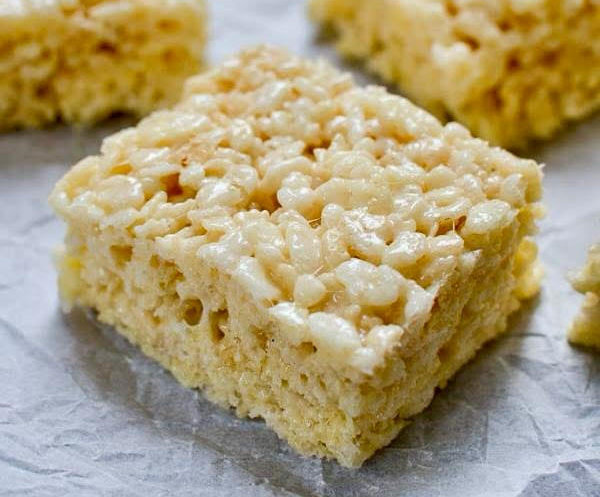
I don’t like marshmallows. I don’t care for crispy rice cereal. Both are baby foods. Put either in front of me, and I’ll politely decline. But mix the two together—along with a dab of fat, a touch of salt, and a little stovetop wizardry—and suddenly I’m 8 years old again, cradling one of the most texturally fun and glorious desserts ever invented. Homemade or store-bought (shiny blue wrappers, anyone?), Rice Krispie Treats are pure joy. They snap, they crackle, they pop in a delightfully chewy, pull-apart way. No other dessert resists your teeth while simultaneously giving in with such sweet, gooey drama. And that’s the magic: Rice Krispies are a texture thing. Light crunch on the outside. Soft marshmallow in the middle. So much fun to chew. I’ve been eating these bad boys since the ’80s, and I plan on doing so well into my ’80s—for as long as my teeth will allow. You don’t need flour, eggs, or a degree in baking. Just melt, mix, press, and try not to eat half the pan before it cools. This is childhood distilled into three inch squares. A humble, four-ingredient miracle. Forget crème brûlée or fancy soufflés. If dessert was a sport, Rice Krispie Treats are my MVP. ★★★★★

Courtesy Unsplash
Despite their grime, I love American gas stations. A popular gathering place, they are an everyday window into the soul of a country that has an estimated 5-10 times the number of road miles per capita than any other nation. Here are five surprising facts about these real-world internet portals. Continue reading…

Thanks for reading and sharing my latest clippings:

Courtesy Pixar
As written by Brad Bird for Ratatouille, the best Pixar movie ever
“In many ways, the work of a critic is easy. We risk very little, yet enjoy a position over those who offer up their work and their selves to our judgment. We thrive on negative criticism, which is fun to write and to read. But the bitter truth we critics must face, is that in the grand scheme of things, the average piece of junk is probably more meaningful than our criticism designating it so.
But there are times when a critic truly risks something, and that is in the discovery and defense of the new. The world is often unkind to new talent, new creations. The new needs friends.
Last night, I experienced something new: an extraordinary meal from a singularly unexpected source. To say that both the meal and its maker have challenged my preconceptions about fine cooking is a gross understatement. They have rocked me to my core.
In the past, I have made no secret of my disdain for Chef Gusteau’s famous motto, ‘Anyone can cook.’ But I realize, only now do I truly understand what he meant. Not everyone can become a great artist; but a great artist can come from anywhere.
It is difficult to imagine more humble origins than those of the genius now cooking at Gusteau’s, who is, in this critic’s opinion, nothing less than the finest chef in France.
I will be returning to Gusteau’s soon, hungry for more.”

Courtesy Unsplash
Money worries are a universal experience. But they don’t have to ruin your life. The following six strategies aren’t just theory—they’re backed by experience, research, and common sense. Use them to take back control and give your brain the peace it needs. Continue reading…

Courtesy Shutterstock
Anyone who says “false” are ignorant, insecure, and intolerant extremists. For a healthier and more compassionate republic, will you please join me in this belief?
P.S.—Independents who knowingly “threw away their vote” by casting ballots for neither love democracy too. I beg you: let people vote how they choose without vilifying them.
SEE ALSO: Why is every four years “the most important election ever”?
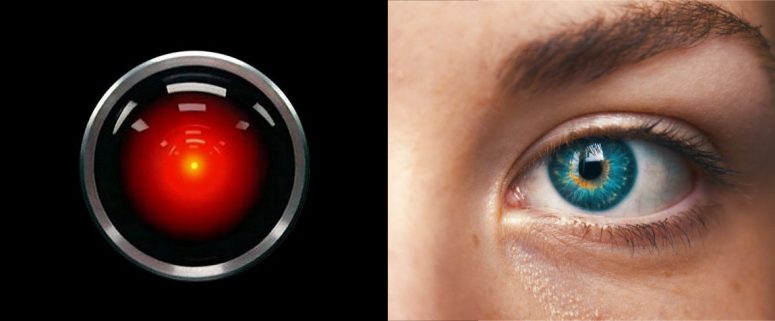
Machines are getting scary good at sounding human.
Thanks to AI computers like ChatGPT, algorithms can now spit out convincing essays, clever headlines, decent jokes, and even empathetic replies. And while it’s easy to marvel at the progress—because let’s be honest, it’s impressive—many of us are left asking a bigger question: How can we still tell what’s written by a real person and what’s not?
The answer, thankfully, is still pretty clear—if you know where to look. Because while AI is quick, articulate, and increasingly stylish, it often lacks the thing that makes human communication so… well, human. That hard-to-pin-down blend of emotion, experience, imperfection, and intuition. AI is excellent at imitation.
But being human? That’s still our domain. Here’s how to spot the difference. Continue reading…

These are the biggest “Aha!” moments in human history—breakthroughs that completely changed how we live, think, and understand our place in the universe.

Courtesy Shutterstock
I’m amazed by the number of times I’ve awoken from a good night’s sleep with a clear answer to a specific problem—no conscious thinking required. That could be the opening sentence to a writing assignment I didn’t know how to start, the best way to overcome a disagreement with a coworker, or how to approach a crucial conversation with a family member.
It might not make sense on paper. But then again, neither do dreams, gravity, or the first time someone put peanut butter and chocolate together. And yet, they work—beautifully.
The truth is, our subconscious mind can do a lot of heavy lifting (if not all of it) when it comes to solving problems. Some of the greatest thinkers of all time—Thomas Edison, Winston Churchill, David Ogilvy—were loud champions of stepping away, slowing down, and letting the back of their brain chew on things. Not by grinding harder. But by sleeping longer, walking slower, birdwatching, vacationing, or just staring into the ether until the fog lifted.
So how does that actually work? And more importantly, how can you bottle a little of that magic for yourself? Continue reading…
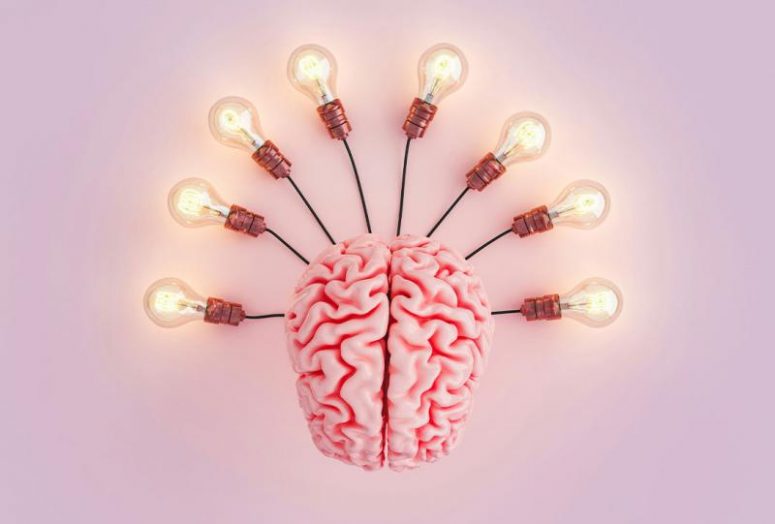
Courtesy Unsplash
As backed by the latest science, research, and my own personal experience.
1. Be grateful everyday. Gratitude shifts your focus from what’s lacking to what’s already good in your life. This re-trains the brain to see abundance. To do this, write down 3–5 things you’re grateful for every day. Be specific (“I’m grateful for my friend Sarah calling me today” instead of “I’m grateful for friends”).
2. Surround yourself with abundant thinkers. Mindsets are contagious. Being around people who think big and generously will naturally expand your worldview. So seek out mentors, peer groups, or communities that focus on hope, generosity, and growth instead of fear and competition.
3. Reframe limiting beliefs. Scarcity thinking is often rooted in subconscious beliefs like “There’s never enough” or “Success for others means less for me.” Instead, reframe any scarce thoughts like such as “I’ll never have enough clients” into positive ones like, “There are more than enough clients looking for what I offer.”
4. Give time, value, and compliments freely. Giving reinforces the belief that there’s plenty to go around. It’s a practical way to “prove” abundance to your subconscious. So offer your help, share knowledge, and give honest appreciation—without expecting immediate returns.
5. Visualize abundant winning. World-class athletes regularly do this, since visualization helps rewire neural pathways for optimism and opportunity. When comfronted with a challenge, spend 5–10 minutes visualizing your goals as already achieved. Imagine the feelings, details, and outcomes. See yourself overcoming your obstacles and incredibly the brain will follow.

Welcome back, hungry humans! This is Part 2 of my definitive Provo eats list. After dozens of meals, untold calories, and a lot of enthusiastic fork-dropping, here are 14 more unforgettable bites from a city that keeps outdoing itself. Let’s dig in. Continue reading…

Courtesy Shutterstock
Thanks for reading and sharing my latest clippings:

Courtesy Shutterstock
Rich people treat money differently than the average American — not necessarily because they have fatter bank accounts, but because of their mindset, habits, and access to resources. Let us count the ways:

Lindsey and I are celebrating our 21st wedding anniversary this weekend. Outside of a bumpy first year, it’s been an amazing ride. Love you, Bella.

Courtesy Shutterstock
Happiness often has less to do with external circumstances and more to do with internal habits and choices. Here are 10 things consistently happy people tend to do differently than the rest of America:

Feeling bruised, battered, or beat down? That’s your brain and body waving a white flag. Chances are you’ve been pushing too hard for too long. Getting your groove back isn’t about cranking up the hustle—it’s about igniting your spark again in a way that actually lasts. Here’s what works, according to research and common sense: Continue reading…

Courtesy iStock
Hint: You have to do what the average person won’t.
Most people want to be “above average.” It sounds nice, doesn’t it? Better than middle grades. Faster than the herd. A little smarter, healthier, wealthier, and maybe even more likable.
But here’s the rub—very few people are actually willing to do what it takes. Why? Because standing out requires doing things the average person often skips. Not because they’re incapable, but because they’re distracted, tired, or content with just getting by.
The truth is… average is crowded. It’s busy hitting snooze, running late, winging it, avoiding hard conversations, scrolling aimlessly, and skipping the gym. If you want to rise above that—without burning out or becoming an unbearable overachiever—you’ll need to zig where most zag.
Here’s what above-average people consistently do to set themselves apart. Continue reading…

Courtesy Unsplash
As written by the world’s smartest computer: That’s a big question—and a fascinating one. After parsing millions of sources across virtually every domain, here are five profound things that emerge from the collective knowledge of the web:
It’s beautiful that we have computers capable of telling us so much about ourselves.
 I have a theory: the simpler the food, the harder it is to get right. Case in point—pasta aglio e olio. No cream. No meatballs. No tomato sauce or artisan basil drizzle. Just pasta, garlic sautéed in oil, and if you’re feeling wild, a pinch of red pepper and parsley. That’s it. On paper, it sounds boring. A last-minute pantry meal. The dish you make when you’re broke or out of ideas.
But when made well, pasta aglio e olio is nothing short of fantastic.
I first had it years ago in Naples, the spiritual home of carb-driven joy, served by a grandmother who looked like she’d personally invented garlic. I expected nothing. And then—bam. Flavor bomb. The roasted garlic infused every strand of al dente spaghetti with a subtle nuttiness. The olive oil coated my tongue with a smooth, silky richness. The crushed red pepper delivered just enough kick to remind me I was alive. It was rustic, honest, and quietly brilliant. Continue reading…

Courtesy Unsplash
Let’s be real: money can buy happiness—you just have to know where to shop. While everyone’s values differ, these are widely recognized as five of the best, most rewarding, and enriching ways to spend your money. Continue reading…

Courtesy Unsplash
Based on the most recent (2024) global data from the UN, World Bank, Pew Research, and WHO:
By region
By religion
Living conditions
Education & tech
Race & ethnicity
Wealth

Courtesy Unsplash

Courtesy Shutterstock
Every human needs a little help sometimes. Here are seven, science-backed ways to improve your mental health this year:

Courtesy Unsplash
At what I hope to be a little less than halfway through mortality, I’ve definitely begun to feel the onset effects of aging. Shrinking family. Thinning hair. Achy body.
Perhaps the biggest, though, is how much quicker time flies. Decades pass like years. “Recent” memories aren’t so recent. They’re downright old.
Although no one can literally slow time, each of us can slow how we experience it. Here are 10 ways for doing just that: Continue reading…