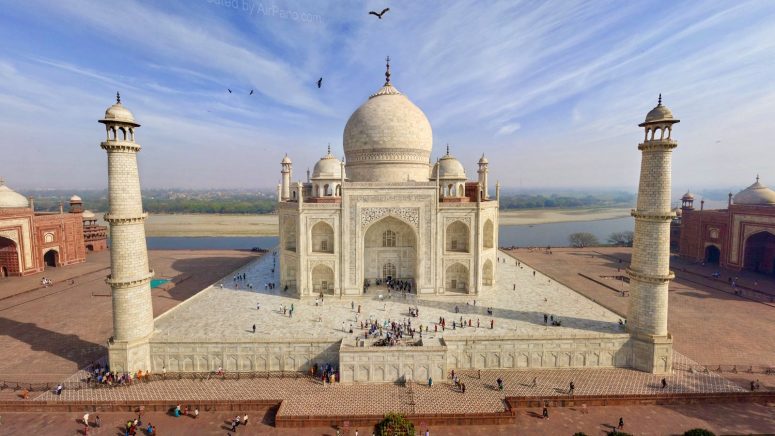
Courtesy AirPano
There is no replacement for seeing something with your own eyes. Let alone hearing, smelling, and feeling it with your own presence.
But despite coronavirus quarantines, there’s still something you can do about it. With the help of modern technology, there’s a lot you can do about it.
From seeing the seven wonders of the world and world-class museums, to exploring the great outdoors and National Parks on foot, these are the best virtual tours I found online in a story I wrote for Lonely Planet.
Hope you enjoy.

Stay safe out there, Internet.
 This week many world and local leaders hit the nuclear response button to a pervasive, flu-like virus that kills a lot of old people and around 10 times the number as the common flu, according to the latest figures.
Dubbed “the coronavirus” (covid-19 to be scientific), roughly 92% of all infected age groups survive and fully recover. For those under 60, the survival rate jumps to over 99%. For those in their 70s and 80s, or those with respiratory or smoking conditions, the survival rate drops to 96% and 92% respectively. For comparison, the flu kills .1% of those infected on average.
Understandably, those “much higher than normal odds” are a scary concern for senior citizens like my parents who venture out in public. But depending on how optimistic you are, a 92-99.5% survival rate doesn’t warrant shutting down society for, as one megacity in China has done and the entire countries of Italy, France, Spain (and surely more) have already done.
In my opinion, those reactions are the nuclear option. A “flattening the curve” of infections at all costs option. In America, we’ve so far taken a hybrid approach, which is still an overreaction, in my risk-taking opinion. Although citizens are free to move about and go to a decreasing number of open stores (because there isn’t enough foot traffic to keep them all open), every public event, many businesses, most churches, and an increasing number of schools are closed to meetings.
To make matters worse, public officials haven’t explained an endgame or exit strategy for the first wave of 15-30 day closures. Because they don’t have one. This only causes more panic and uncertainty. Continue reading…

Courtesy Shutterstock
I wrote this for Lonely Planet today and hope it can lighten any travel restrictions.

Courtesy Shutterstock
This is a fascinating report by Time on cultural truth, incomplete science, better than nothing protection, and the cost of social distancing. “People look at me funny because I don’t wear a mask,” Chan says. “But I think the only thing that’s laughable is everyone buying into this excessive fear. People are being led by emotion, not science.”
PS—I’m grateful for public health officials and infectious disease doctors. Like vaccines, I believe they have our best interests in mind. What I’m not comfortable with is a nuclear social distancing response in reaction to a serious but still not that deadly virus (aka the vast majority of those infected by coronavirus live). It’s unfair to trump out a “flatten the curve at all costs” approach to something that doesn’t deserve such a dramatic response. Just because we could “flatten the curve” of 61,000 flu deaths last year with nuclear social distancing doesn’t mean we should. That’s why people are upset, scared, and confused. We can’t agree on the price to pay!
The following was updated and adopted from a recent hired-speech I gave to a group of 50 CEOs and partners at the headquarters of NEA, the world’s largest venture capital firm.
 Since 2005, I’ve written for half of the top 20 U.S. media and dozens of Fortune 100 companies as a seasoned writer-for-hire, content marketer, and best-selling author. From those experiences, this is what I know for sure: marketing is the way you let people know you exist. Content marketing is the ongoing explanation for why they should care.
As a discipline, branded journalism, thought leadership, and executive editorial is important, because it allows companies to persuade highly-informed buyers in an increasingly noisy world. Not only is it the fastest growing marketing budget, it’s also the most effective for satisfying search demand, engaging audiences, and satiating a buyer’s need to read and inform themselves before making a purchase.
What surprises people most that engage me? Here are the top five: Continue reading…
 The following was written by Dr. Abdu Sharkawy after a global wave of premature event cancelations, travel restrictions, and economic collapse:
I’m a doctor and an Infectious Diseases Specialist. I’ve been at this for more than 20 years seeing sick patients on a daily basis. I have worked in inner city hospitals and in the poorest slums of Africa. HIV-AIDS, Hepatitis,TB, SARS, Measles, Shingles, Whooping cough, Diphtheria…there is little I haven’t been exposed to in my profession. And with notable exception of SARS, very little has left me feeling vulnerable, overwhelmed or downright scared.
I am not scared of Covid-19. I am concerned about the implications of a novel infectious agent that has spread the world over and continues to find new footholds in different soil. I am rightly concerned for the welfare of those who are elderly, in frail health or disenfranchised who stand to suffer mostly, and disproportionately, at the hands of this new scourge. But I am not scared of Covid-19. Continue reading…
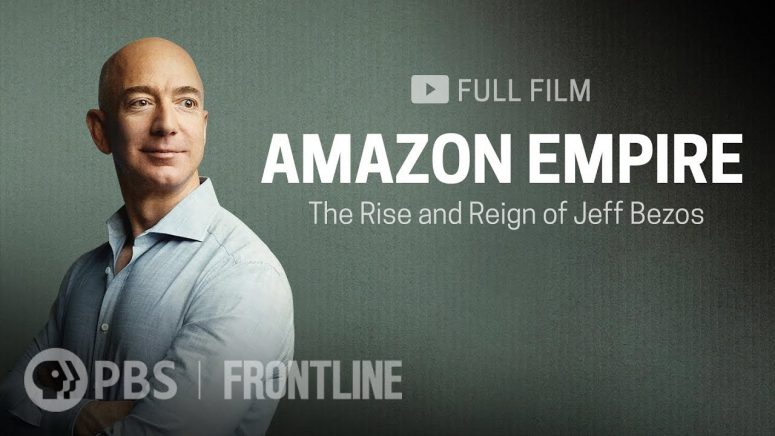
My wife and I (and even some of our young children) watched Amazon Empire: The Rise and Reign of Jeff Bezos recently. It’s a slick documentary that raises some important questions and concerns about the increasingly monopolistic company that keeps prices low (instead of raising them like past monopolies).
The movie wasn’t enough to make me ditch my Amazon Prime or Alexa accounts, especially given how much time and money Amazon has saved my family over the last two decades. That could change, but for now I’ll say: so far, so good. In fact, I’d rather convert to Android and stay with Amazon than stay with Apple and ditch Amazon—I like them that much.
For its slick production and warranted scrutiny, I award it ★★★★☆.
Fun fact: Walmart made twice as much money as Amazon did last year ($512 billion versus $233 billion).
Me at my desk. Photo by Lindsey Snow
I was recently on a podcast to talk about my education and career path towards becoming a full-time freelance writer for the past 16 years. If you have 30 minutes to spare, I hope you enjoy my remarks. If you don’t have that much time, the short answer is lots of luck and persistence. Either way, I’m still pinching myself.
Thanks for having me on the show, Doug.

This story by Molly Young on why corporations speak nonsense is the best thing I’ve read in a long-time:
But unlike garbage, which we contain in wastebaskets and landfills, the hideous nature of these words — their facility to warp and impede communication — is also their purpose. Garbage language permeates the ways we think of our jobs and shapes our identities as workers. It is obvious that the point is concealment; it is less obvious what so many of us are trying to hide.
I’m partially biased because I spend a lot of my time helping companies talk like humans instead of broken computers. And I suppose I might not have a job if humans always spoke clearly:
When we adopt words that connect us to a larger project — that simultaneously fold us into an institutional organism and insist on that institution’s worthiness — it is easier to pretend that our jobs are more interesting than they seem. Empowerment language is a self-marketing asset as much as anything else: a way of selling our jobs back to ourselves.
Either way, I think this is a must-read. I enjoyed every word—well, the non-garbage ones at least.

Courtesy Mark Manson
Hope you enjoy these recent long-form articles as much as I did:
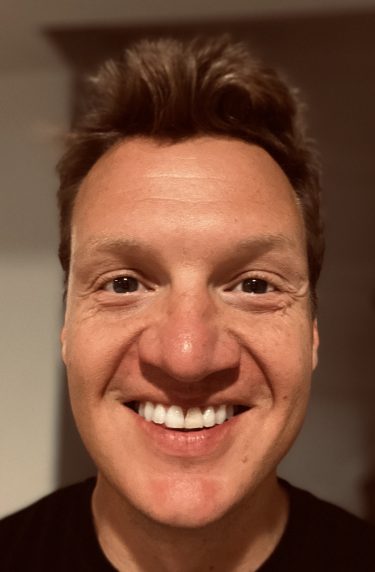 I was recently interviewed by Metro International, the world’s largest free daily newspaper, about my book. This is what I said and thought you might enjoy:
In your book description you say that excessive “internetting,” smartphoning, and social media make us miserable, Why do you think that?
That’s not my opinion. There’s an overwhelming amount of research that proves that virtual socialization is no substitute for the real thing. In fact, it’s even worse since infinite scrolling on screens is either curated highlights that make our own average lives feel worse by comparison, or endless online news that make the world sound a lot more worse and scary than it really is.
In this connected world, do you think you can really manage to live disconnected? How?
As outlined in my book, not only can we successfully disconnect, we can thrive more offline when we find a good balance of it. Smartphones, the internet, and social media aren’t all bad. But they can be if we allow them to be. The trick is setting boundaries in ways that allow them to work for us instead of letting them interrupt and dictate our everyday lives. Continue reading…
 The following is an excerpt from a graduation speech my father Brent Snow gave in 2008 at the University of West Georgia:
I grew up in the deep south—deep southern Idaho–so I picked potatoes rather than cotton! My family was very athletic and my older brother Bruce was probably the best all around athlete in Idaho when he was a senior in high school. Being two years younger, I was constantly compared to him in every sport I played as well as in academics. While I was often on the “short” end of those comparisons, I never resented being so. I respected and admired him a great deal and thought it was an honor to be compared to him.
After finishing my Ph.D. in 1979, I became a faculty member at Oklahoma State University. After I had been there for a couple of years, my Father called me and said he was coming to Stillwater and maybe we could go see a couple of basketball games that were on the schedule. This was quite common for us as athletic events were really an excuse to be together, laugh, and for me to be interviewed about how I was doing—was I doing what I should as a Dad?, husband?, and in my work? I loved those interviews with my Father as he would listen and share some advice and wisdom all the while watching a point guard hit a three pointer! You didn’t have to know my Dad very long to realize he was a very wise person.
After one of those games on the way home, we had been talking about my Brother and me always being compared as athletes. I decided to try to be a little clever by putting my Dad on the spot and testing his wisdom:
“Well Dad, how would you compare Bruce and me as athletes?”
“In what sport?” he said –surprising me that he was willing to do so.
“How about baseball?” Continue reading…
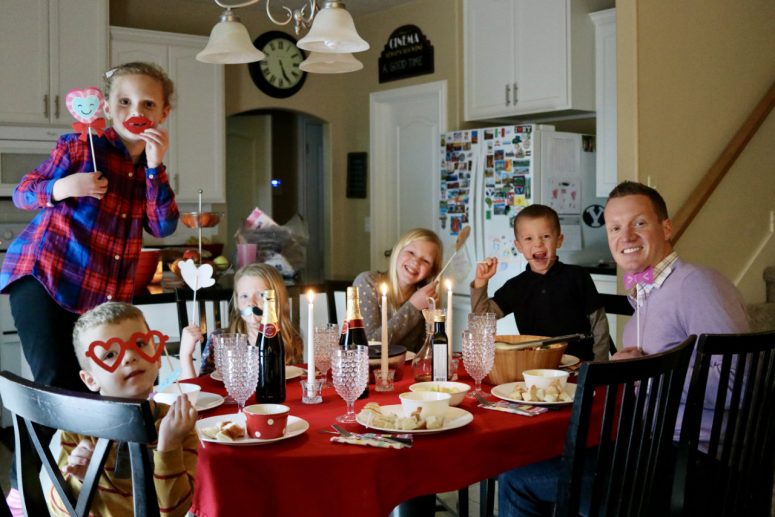
Valentine’s dinner with kids at home beats crowded restaurants
Like any red-blooded American, I grew up observing Valentine’s Day, albeit casually. I traded candies with classmates, chocolates and stuffed animals with crushes, and used to take my wife to “romantic” dinners at crowded restaurants.
It was not an enjoyable experience, especially the latter. A few years after marriage, my wife and I started eating Valentine’s dinner on another day the week to beat the crowds, but that didn’t feel right either.
Then one day nearly 10 years ago, my wife proposed a radical idea: “Why don’t we stay home and cook a nice candlelight dinner with the kids and celebrate all kinds of love, not just romance?” By this point, I didn’t really care since nothing seemed to work. “Sure,” I said. Continue reading…
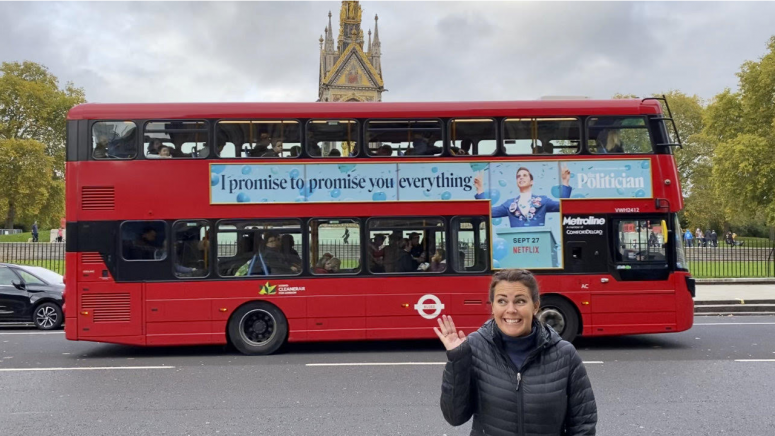
Courtesy Blake Snow
Planning to visit London but now sure what to do while there? Here are some iconic highlights for first-timers, things repeat visitors may have missed, as well as special considerations, things to avoid, and where to stay. Continue reading…
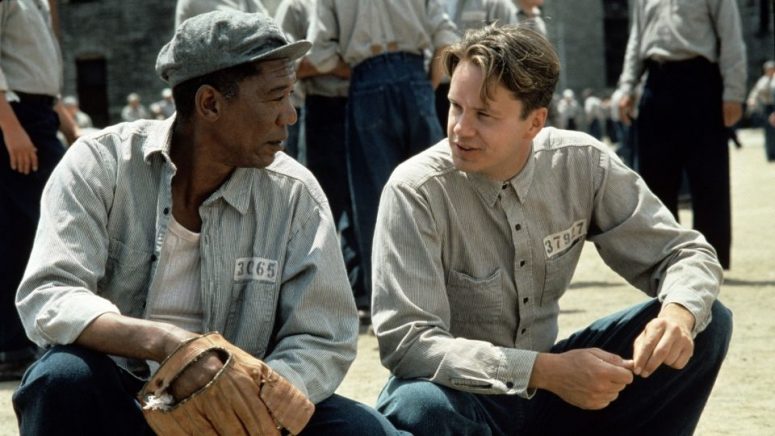
I volunteer with a support group that counsels and encourages ex-prisoners back into society.
It’s heavy stuff, especially since many of them are homeless when they first get out and largely ostracized by friends, family, and greater society. Those are hard conditions to beat, which is why so many of them return to prison (upwards of 70%).
That said, these meetings are usually incredibly warm, uplifting, humbling, and inspiring. Just last night, one participant expressed frustration in how difficult it can be to leave negative relationships behind, especially if you don’t have any positive relationships to replace them with.
In other words, misery loves company. As social creatures, many humans would rather stay with toxic people than endure loneliness.
When I quit recreational drugs, I spent a lot of lonely nights on my own. My friends were still good people, but I had to remove myself from negative behavior.
It was hard. But after a while, I gradually started fellowshipping with less dependent, more “naturally high” individuals. That felt wonderful and totally worth the temporary loneness I suffered in order to meet them.
So if you’re in an unhealthy relationship but don’t want to be alone, that’s understandable. But it’s better to brave temporary loneliness than to endure ongoing negativity.
The sacrifice is worth it, I promise.

My sister-in-law challenged our family to a plank-off recently. Person who could plank the longest wins. “I don’t know,” I said. “I can’t stomach those things for 30 seconds.”
Or so I told myself.
Before continuing my story, a quick note: Like any inherently lazy human, there are a lot of exercises I hate doing. But planks are the worst—invented by Satan himself. They’re right up there with Turkish getups, mountain climbers, and wall sits as most uncomfortable for me. So I wasn’t enthused to participate.
“I’m in!” my wife said. My daughter, too, was excited to compete. “I’ll try,” I relented, offending Jedi Masters everywhere. Continue reading…

These are the best long-form articles I’ve read recently:

Learning this number-to-time scale blew my mind recently.
We all know that a million, billion, and trillion are very big numbers. But we often don’t appreciate the staggering increases between them. For example, a million seconds equals eleven days. That’s a lot, but two weeks isn’t that far away. A billion seconds, however, is over 31 years—either a third or even half of a lifetime depending on how healthy you are. Now that’s a lot.
But a trillion is unfathomable, if not completely unrelatable to our lifespan. In fact, a trillion seconds is over 31,000 years!!!
The more you know.
See also: A Short History of Nearly Everything
 Earlier this month, I finished a gripping non-fiction and superbly reported book on the terrorist civil war that devoured Northern Ireland from 1969—1998 (aka The Troubles).
Written by Patrick Keefe, Say Nothing is a shocking, deplorable, and sometimes asinine account of two groups of Christians who looked identical, spoke in the same English accent, and only disagreed upon which country they did or should belong to (i.e. United Kingdom versus Ireland). That disagreement, amazingly, caused them to terrorize and kill each other to the tune of 3,500 people, most of which were innocent civilians. To get an idea of how crazy the conflict was, the Irish Republican Army (which was largely a guerrilla group of terrorists) would sometimes bomb civilian buildings, alert civilians a couple hours before the bombing so no one would get hurt, then absolve themselves of any “accidental deaths” because they weren’t responsible for any civilians that didn’t get the message to stay away.
That about sums up the logic behind The Troubles, which thankfully ended two decades ago. But man are the stories from the past as thought-provoking as they are tragic. May history never repeat itself. Four stars out of five.
These were my favorite passages: Continue reading…
 Not only is 2020 the start of a new year, it’s the start of a new “roaring twenties” (hopefully one that doesn’t end in another Great Depression). That’s exciting–the new decade part, not depression.
Regardless of what greater society elects to do, I’m here to tell you that individual people can change. Granted, a lot of people try and fail to change, especially in January. But that doesn’t mean the rest of us are incapable. It just means change is hard.
It’s easier, however, if we make small, daily choices that can have a big impact on our future prosperity, health, and fulfillment. For example, here are 10 simple things you can do on a daily basis to improve your future and slay the next decade of your life. Continue reading…
 I recently read a thought-provoking essay by James Pogue on the rise of long-form articles that are later optioned into feature films and narrative-driven books, sometimes to the tune of several million dollars, as was the case with Argo, a movie that was based on a previously published Wired article.
As Pogue seemingly sees it, this new economy of article-to-film adaptations turns previously idyllic literature into modern day “trash,” which is as harsh as it is inaccurate. For example, Say Nothing, a book written by the New Yorker’s Patrick Keefe and based on his previously published articles, is hardly trash for soon becoming a TV series. In fact, the book is phenomenal and proof that great authors and their stories deserve to be told across as many mediums and adaptations as possible, in an effort to reach as many people as possible—even ones that don’t like to read books or long-form articles.
On the whole, it seems like Pogue is just bemoaning change. Continue reading…
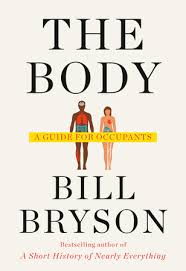 Over the holidays I read The Body: An Occupant’s Guide by Bill Bryson, one of my favorite authors. It is well-researched, captivating, and enlightening. It loses steam in the third and final act, however, which is why I dock it a single star, while still recommending it. These are my favorite passages:
- It’s a slightly humbling thought that the genes you carry are immensely ancient and possibly—so far anyway—eternal. You will die and fade away, but your genes will go on and on so long as you and your descendants continue to produce offspring. And it is surely astounding to reflect that not once in the three billion years since life began has your personal line of descent been broken. For you to be here now, every one of your ancestors had to successfully pass on its genetic material to a new generation before being snuffed out or otherwise sidetracked from the procreative process. That’s quite a chain of success.
- The body is often likened to a machine, but it is so much more than that. It works twenty-four hours a day for decades without (for the most part) needing regular servicing or the installation of spare parts, runs on water and a few organic compounds, is soft and rather lovely, is accommodatingly mobile and pliant, reproduces itself with enthusiasm, makes jokes, feels affection, appreciates a red sunset and a cooling breeze. How many machines do you know that can do any of that? There is no question about it. You are truly a wonder.
- With such an unrelenting work rate, it is a miracle that most hearts last as long as they do. Every hour your heart dispenses around 70 gallons of blood. That’s 1,680 gallons in a day—more gallons pushed through you in a day than you are likely to put in your car in a year.
- Even with the advantage of clothing, shelter, and boundless ingenuity, humans can manage to live on only about 12 percent of Earth’s land area and just 4 percent of the total surface area if you include the seas. It is a sobering thought that 96 percent of our planet is off-limits to us.
- When a teenager struggles to get up in the morning, that isn’t laziness; it’s biology. Matters are compounded in America by what The New York Times in an editorial called “a dangerous tradition: starting high school abnormally early.” According to the Times, 86 percent of U.S. high schools start their day before 8:30 a.m., and 10 percent start before 7:30. Later start times have been shown to produce better attendance, better test results, fewer car accidents, and even less depression and self-harm.
- Medical science has never produced a more noble and selfless group of investigators than the pathologists and parasitologists who risked and all too often lost their lives in trying to conquer the most pernicious of the world’s diseases in the late nineteenth and early twentieth centuries. There ought to be a monument to them somewhere.
- As Daniel Lieberman told me, reaching 80 is largely a consequence of following a healthy lifestyle, but after that it is almost entirely a matter of genes. Or as Bernard Starr, a professor emeritus at City University of New York, put it, “The best way to assure longevity is to pick your parents.”
- It is an extraordinary fact that having good and loving relationships physically alters your DNA. Conversely, a 2010 U.S. study found, not having such relationships doubles your risk of dying from any cause.

I jumped in a pool while fully clothed and turned 40 this year. It’s been a wonderful decade with family, friends, and a job I love. Thanks for reading and Happy New Year!
Favorite place visited: Chicago (really!)
I was recently asked my approach to sales, given that I spend significant time asking people if I can write for them. Here it is in its entirety:
“Hi, human. I sell this thing for a living because I believe in it. It’s benefited myself and others like you. Are you the right person to pitch? If no, do you know someone who is? If yes, is now a good time?”
That’s it. This gentle but persistent approach has served me well, because it respects timing as much as finding and asking the right person.
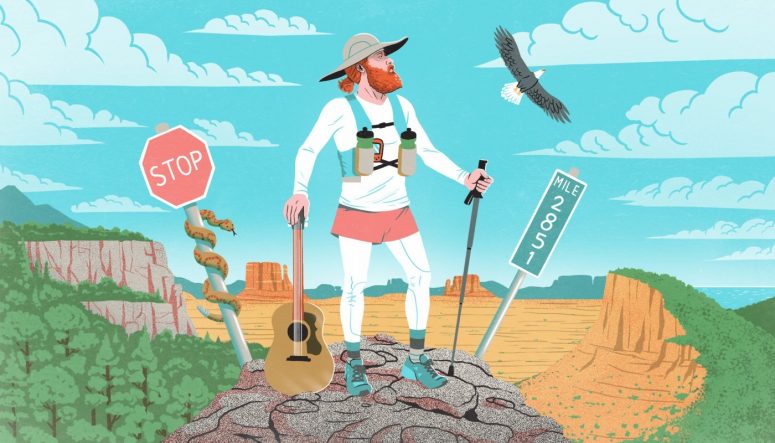
Courtesy Outside Magazine
- What are borders for anyways?—There was a time when you had to commit a crime, or be suspected of committing one, to have your fingerprints and photograph taken by an officer of the state. Now all you need to do is take a trip.
- Examining illegal birth names—Some working-class names aren’t just looked down upon, they’re illegal. But these laws, which stretch from New Zealand to Tennessee, are often more about oppression than public decency.
- Why this bubble or eventual recession will be different—What we’re seeing today isn’t a dot-com bubble. If anything, it’s a not-com bubble—a period of inflated expectations for companies that had no business being valued like pure tech companies in the first place.
- What it’s like to eat meal replacement shakes for two years—Whether nutrient shakes are the food of the future, however, is up for debate. Julie Heseman, a principal at food service industry consulting firm Foodservice IP, thinks this type of product won’t take off for one reason: it’s just not tasty enough.
- Inside football’s campaign to save the game—Nationally, high school participation in 11-man football has fallen more than 10 percent since 2009. Here’s what the game is doing to attract athletes.
- “Kids these days” are actually better, even if you don’t understand them—Prediction: Today’s “OK boomer” Gen Z will complain about the youth one day. Blame human memory.
- Don’t be a jerk to your online humor editor—It should go without saying, but angrily replying to a rejection will get you nowhere.
- Chaos on top of the mountain—The story behind the viral photo and deathly May day on Mount Everest this year.
- Why a pop star walked across America—Years after he took that pill in Ibiza, Grammy nominee Mike Posner left behind his life in L.A. to go on a 2,851-mile journey in search of redemption, motivation, struggle, and triumph.

Several years ago, I visited San Diego for a story I wrote for Paste Magazine.
While there I met two Latino immigrants who are now paragliding pilots for one of the best paragliding spots in the whole world—Torrey Pines.
The first was named J.C. Originally from Venezuela, “I come to America twenty years ago with only $70 and a parachute,” he told me when I asked about his story. “Now I have a wife and kids and pilot parachutes for a living,” he added.
Another man named Junior told me he used to make sandwiches for the Torrey Pines cafe before becoming a full-time pilot. Today he regularly takes paying guests on controlled spiral spins and up-downs above the beautiful coastline. “The American Dream is a live and well,” he told me then.
I realize this small sample size cannot and does not speak for every immigrant or domestic American story. I also realize this is a topic many people will disagree on.
But in my experience, I meet more believers in the American dream than not. And as long as immigrants keep coming in at record numbers, the outside world seems to think the same.
Can’t fault them for trying. Or better yet, doing. It’s the type of believers I want my children to share their future with.
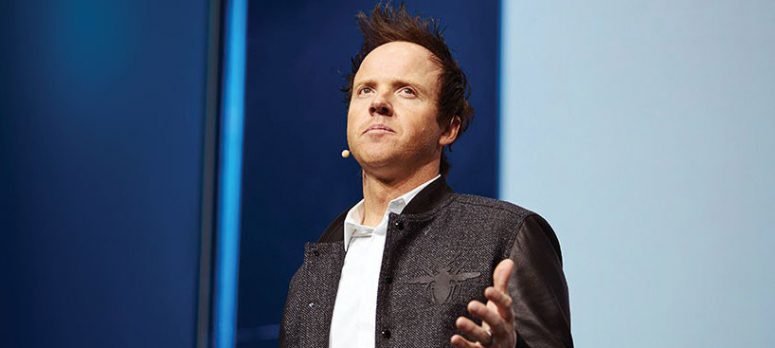
I recently enjoyed this commencement speech by Ryan Smith and hope you do too. It’s sweat advice on being “all in” in work, family, and our underlying beliefs.

Courtesy Shutterstock
Thanks for reading and sharing:
I used to be a night owl. But after waking up groggy for three decades, I learned in my 30s to embrace sleep, if not be selfish with it—i.e. I rarely if stay up past 10 or 11 now, even on weekends.
Since then, I’ve accomplished signficantly more, especially on mornings and weekends, which I used to let slip by. How do I do it?
These are the rules that I live by, according to science: Continue reading…

This story first appeared in Paste Magazine after the heated election of President Trump
I just returned from an extraordinary hike through Patagonia’s great outdoors (review here). When I left, the world was collectively bracing itself for a politically incorrect and hugely unpredictable man to assume America’s highest office. Two weeks later, I returned to a world that was deeply concerned about Donald Trump’s hasty, religiously-profiled, and arbitrary American hold on accepting immigrants and visitors from seven Middle East countries.
Seemingly overnight, the world had become a more isolated and divided place. In uncertain times like this, it’s best to batten down the hatches, stay inside and keep to our own, right? At most, whirl a few zingers on social media from the comforts of home maybe?
While I can’t do anything for the millions affected by the travel ban and am hesitant to recommend visiting unwelcoming or otherwise hostile places, my answer is an emphatic “NO!” Continue reading…

Courtesy Wikimedia
I recently visited Berlin for the first time to commemorate the 30th anniversary since the fall of the wall. While there I took several fascinating tours of this war-torn, politically complex, once divided, but now peaceful capital. (Incidentally, Berlin unexpectedly became one of my favorite European cities—right up there with Rome, Ljubljana, Budapest, and Paris.)
Although I’m usually not a history buff, while touring the capital I was struck by the swiftness of Hitler’s dictatorship, which was as breathtaking and brutal as it was conniving and sabotaging. Upon returning home, I was coincidently introduced to Secret Hitler (a very fun board game), which further piqued my interest in the reviled dictator.
To that end, I downloaded his personal biography (Mein Kampf) and read his entire Wikipedia profile. Here are some of the more interesting facts I’ve learned so far about the most hated villain the world has ever seen: Continue reading…
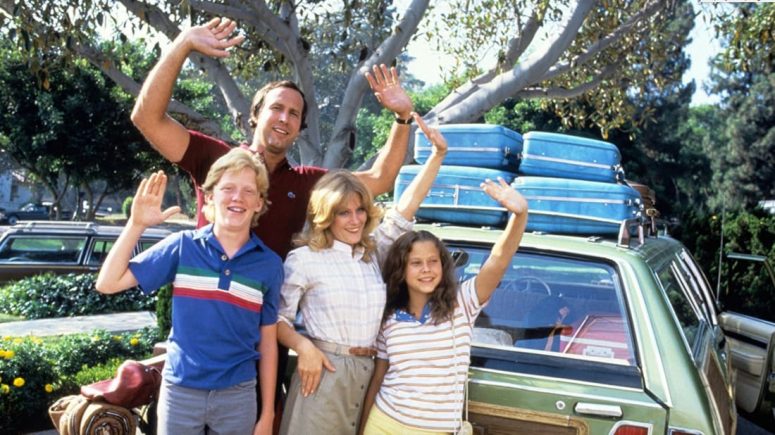
As parents for over a decade, my wife and I have forced a lot of dogma upon our five children. Some might call us total meanies for doing so. Nevertheless, here’s how we’ve indoctrinated them so far: Continue reading…
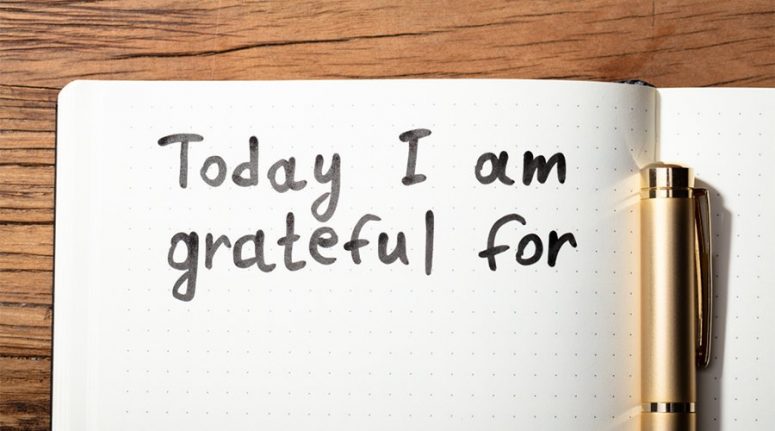
I’m quick to extol the benefits of expressed gratitude. Not only is it scientifically proven to make us happier, it can be super easy to do—if you get in the habit, that is.
Take thank you letters for example. All you have to do is think of someone who has blessed, supported, buoyed, transformed, changed, or even saved your life. Then visit them, call them, or write them to express your gratitude for helping you. (For more tips, click here)
I like to take this a step further, however. Eventually you might run out of people to thank. What can you do then? Thank them again for their continued support. Then again and again. When that gets awkward, I move to the next best thing. Continue reading…

Some oldies but goodies.
- “Time is time, money is money.”—anonymous
- “The squeaky wheel gets the grease.”—anonymous
- “You can’t make an omelet without breaking a few eggs.”—anonymous
- “Don’t count your chickens before they hatch.”—anonymous
- “Honesty is the best policy.”—anonymous
- “A journey of a thousand miles begins with a single step.”—Chinese proverb
- “Measure twice, cut once.”—anonymous
- “You can catch more flies with honey than with vinegar.”—anonymous
- “Everyone thinks of changing the world, but no one thinks of changing himself.”―Leo Tolstoy
- “A year from now you will wish you had started today.”—Karen Lamb
- “You miss 100 percent of the shots you never take.”–Wayne Gretzky
- “If you don’t like something, change it. If you can’t change it, change your attitude.”—Maya Angelou
- “God grant me the serenity to accept the things I cannot change, the courage to change the things I can, and the wisdom to know the difference.”—Reinhold Niebuhr
- “When you’re finished changing, you’re finished.”—Benjamin Franklin
 What does it mean to “work smarter, not harder”?
Leading research has the answer. It is this: unconscious (or otherwise subconscious) thought is often better at making inspired decisions than our conscious thought.
In that way, those who work smarter, not harder, let their subconscious go to work. They don’t sit in front of a perplexing problem for prolonged periods of time, forcing themselves to find a solution, even if they’re not in the right mental state to solve it. They let their mind breathe.
Let me give you an example. I was recently faced with an important personal decision that seemingly needed to be made immediately without accurate information being available. I was feeling social pressure to make a decision that very afternoon.
Instead of doing that, I went for a walk by the river without directly thinking about the concern. I took a break, both consciously and presently. When I returned 20 minutes later, I felt refreshed. My mind felt clear. Only moments after arriving home, I decided what to do (something I hadn’t first realized) and I felt confident in my decision.
In hindsight, I believe I made the smarter and right decision. But only because I allowed my brain to work smarter, not harder. As we temporarily walk away from our problems, we let your unconscious mind do much of the heavy lifting. Doing this actually allows faster problem solving, while avoiding the “wheels spinning in the mud” syndrome that too many people succumb to.
At least that’s been the case for me. You should try it. All the smart kids are doing it.

There’s a great line from Goonies uttered right before the second act. “Kids suck,” grumbles an exasperated Mother Fratelli, having been reminded how unruly children often are.
There’s no denying what a pain-in-the-ass kids can be, especially while traveling. There’s also no denying their ability to help us see the world with younger eyes again, laugh more, soften calloused hearts, learn new things, reawaken zest and relive the past.
Depending on your outlook, the trade-off is usually worth it. For the brave souls traveling with kids, here’s how to minimize collateral damage on your next trip. Continue reading…
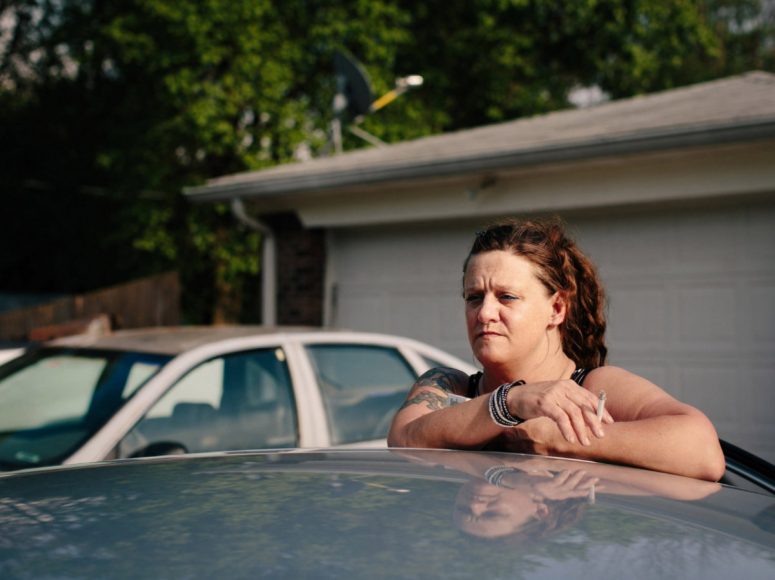
“I’m not mad at you,” she said. “I’m happy that you get the opportunity to make some money. I was blessed for a while. I hate to see it go. Now it’s your turn to be blessed.”—Shannon Mulcahy from Indiana after losing her job to an offshoring immigrant in a story published in the New York Times.

I’ve been thinking a lot lately about the difference and importance of both skepticism and optimism.
For example, whenever I ask someone if they’re a pessimist or optimist, the latter will always embrace the label. But the former will almost always reply with, “I’m a realist,” or “I’m a skeptic.” They do this, I guess, because pessimism has a negative connotation.
Although I wholeheartedly consider myself an optimist, I fully embrace skepticism, however, when it comes to educating myself, asking questions, reporting the news, or examining a complex or controversial topic.
In other words, “consider the source.” Don’t just accept something you hear as fact. Challenge it. Probe it. Make sure it holds water before believing it. Ensure the person delivering the news is in an objective position to give it. If not, be skeptical.
In that regard, we can all be realists and skeptics when it comes to seeking the truth. And similarly, we can all be hopeful optimists when it comes creating and striving for a winning future.

Courtesy Post Malone
I like Post Malone. A lot. Even though I can’t relate.
He’s a young twenty-something rapper with face tattoos that openly indulges in substance abuse and destructive relationships.
I, on the other hand, am a middle-age, clean-cut, ink-free family man who wants to live to 100 over burning the candle on both ends. Continue reading…
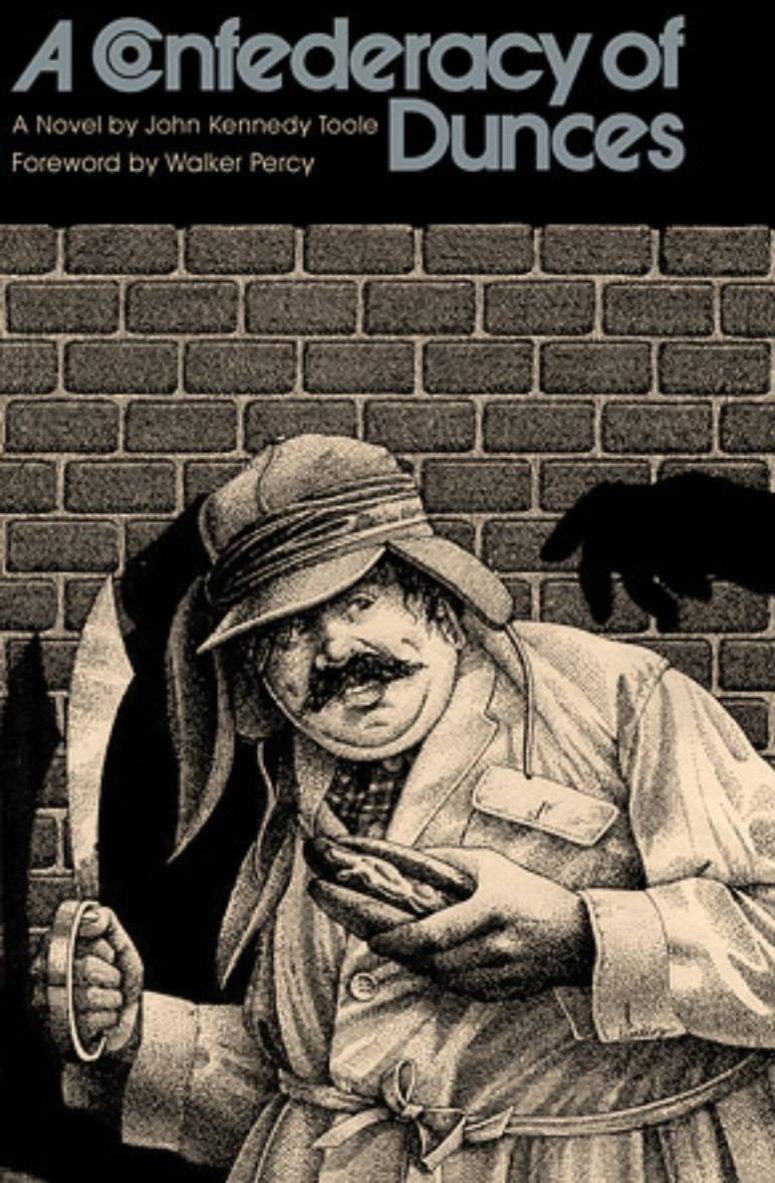
My wife is reading America’s 100 most beloved books and recently stumbled upon this masterpiece, A Confederacy of Dunces by John Toole.
Written in 1962 while Toole was stationed in Puerto Rico on military duty, the novel has been described as “Don Quixote meets the French Quarter,” which is a total abortion. In truth, protagonist Ignatius J. Reilly is much more likable, hilarious, and compelling than the former. His misadventures through New Orleans with an ensemble cast of nearly a dozen charismatic characters are a joy to read, as is Toole’s exceptional writing, satisfying storytelling, and clever dialogue.
In short, I could not put Dunces down and cannot recommend it enough. Sadly, the Pulitzer Prize-winning work wasn’t published until 1980, this after the author was rejected by multiple editors who called his writing “pointless,” which partially caused him to succumb to depression and later suicide in 1969.
Thankfully Toole’s mother and an a university professor re-pitched the book posthumously until it was finally published. I’m so glad they did and wonder what could have been had its genius author lived to tell another tale. “Just wait till they hear all that originality pouring out of your head.”
Rating: ★★★★★
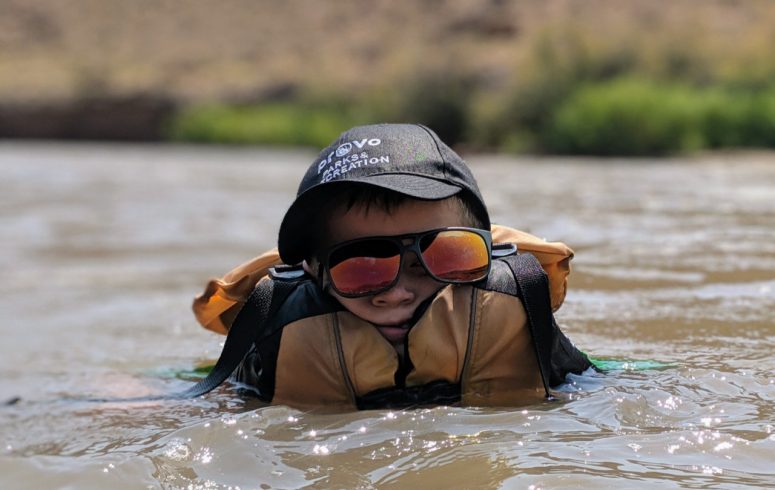
Excluding my non-bylined commercial writing, here’s what I’ve written for news media lately:
Thanks for reading and sharing.
 After years of asking, I finally caved into giving my oldest child a “smartphone” for her 14th birthday. I say “smartphone” in quotes because we really just bought her an iPhone without a carrier plan (aka the latest iPod touch).
To use her phone and send and receive calls and texts from a virtual number app, she must be connected to wifi. She’s happy for now, although this is likely only a two year stop gap until she starts driving and we start teaching her full smartphone etiquette before she leaves home.
But for now, we’re all happy. Especially since my daughter has agreed to obeying the following rules, as outlined in my book: Continue reading…

Courtesy Medium
I really enjoyed the following long-reads recently:

My family drove the colloquially famous and incredibly scenic Alpine Loop in Provo Canyon this month for fall foliage. And when armed with her new camera, my wife captured a few excellent wide-angle shots: Continue reading…
Me at my desk courtesy Lindsey Snow
I’ve been a professional writer since 2005 and a full-time writer since 2007. I moonlighted for a couple of years before transitioning to a full-time freelancing journalist, a “calling” I continue to this day.
Since then, these are some of the most frequently asked questions I get from aspiring writers or otherwise curious email inquires:
How do you become a self-employed writer?
My advice: write everyday and ask 50 people if they will publish your best work. If they all say no, ask 50 more and so on. This never fails but most writers will never do this and therefore go unpublished and unpaid. Usually I don’t even have to ask 50, but in two exceptional cases, I asked over 100 before someone said yes: My first story for Wired Magazine about college footballcomputers and my first travel column for Paste Magazine. Both were huge wins for my career and would have never happened had I quite after asking just 50. The harder you work, the luckier you get. (See also: How to succeed: Don’t quit until everyone in the room tells you “no”)
Is it actually possible to make a decent income at home and support a family by being self employed writer?
Yes. I’ve worked from home for the last 15 years, make a good income, and have six mouths to feed (wife and five children). In my experience, successful self employment requires persistence, low overhead (i.e. low maintenance lifestyle), extra emergency savings, and a willingness to sell your craft in addition to the craft itself. Self employment isn’t for everyone, but it can be done and is remarkably rewarding.
Continue reading…
 Great writing from Derek Thompson for The Atlantic:
“As America’s youth have slipped away from organized religion, they haven’t quite fallen into wickedness. If anything, today’s young people are uniquely conscientious—less likely to fight, drink, use hard drugs, or have premarital sex than previous generations. They might not be able to quote from the Book of Matthew, but their economic and social politics—which insist on protections for the politically meek and the historically persecuted—aren’t so far from a certain reading of the beatitudes.
“Most important has been the dramatic changes in the American family. The past half century has dealt a series of body blows to American marriage. Divorce rates spiked in the ’70s through the ’90s, following the state-by-state spread of no-fault divorce laws. Just as divorce rates stabilized, the marriage rate started to plummet in the ’80s, due to both the decline of marriage within the working class and delayed marriage among college-educated couples.”
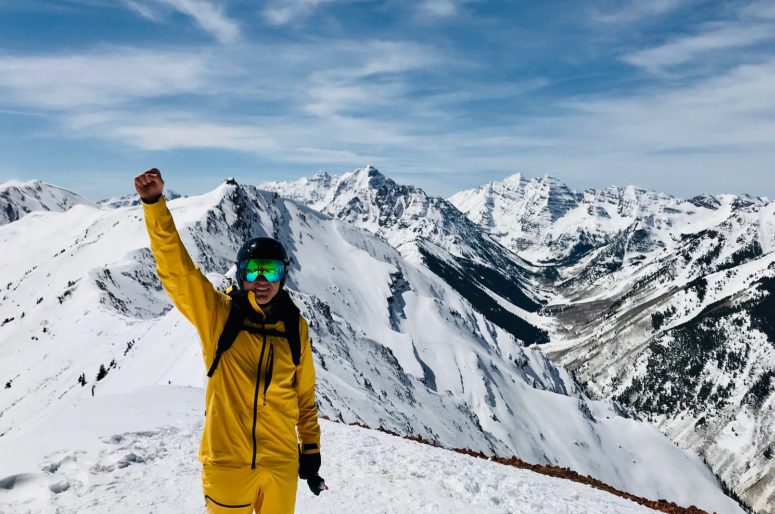
Here’s a roundup of some of my latest travel writing:
Thanks for reading and sharing.
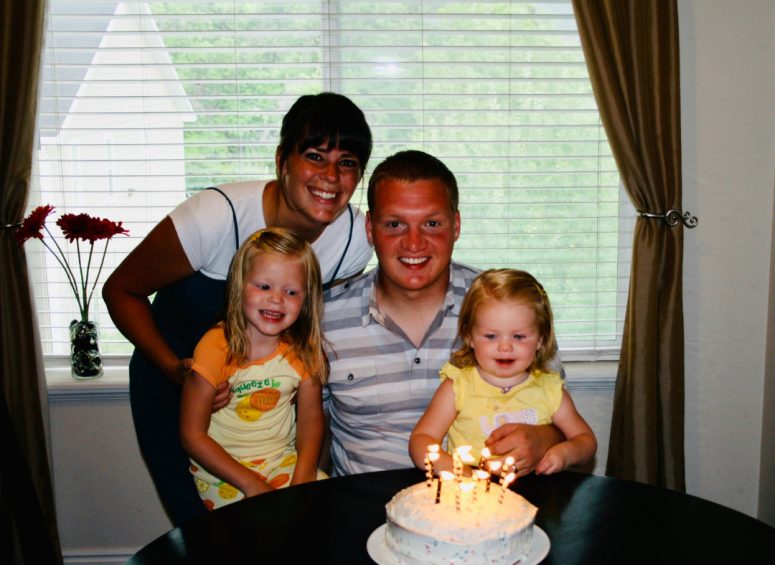
Courtesy Snow family
That’s me 10 years ago on my 30th birthday. Sunburnt. Pudgy. Elsewhere in thought.
I don’t mean to overstate my “condition,” but if you look at photos of me from 2003–2009—the workaholic, internet-addict years—you will see that my eyes rarely, if ever, smiled. I wasn’t depressed or miserable, per se, but I was in a perpetual funk. Wheels spinning without much forward movement. A prolonged period of FOMO which prevented me from thriving in the present with the three, happy cuties you see pictured beside me.
Back then, I neglected my family, my health, my spirituality, my social life, and my hobbies. Ironically, my self-absorption also hindered my work, because my efforts were so short-sighted. Hard working, yes, but with less purpose, focus, and fulfillment than I’ve experienced in the years since.
“We didn’t do as many fun things as a family and you rarely initiated anything,” my wife told me today. “You were always working nights, fixated on your phone, and brought your laptop to bed with you.”
Gross! A couple weeks after that photo, however, I would abandon that stagnant period of my life though a life-changing “Montana Moment,” which I wrote about in my book, Log Off: How to Stay Connected after Disconnecting. I’m so grateful for that experience and the decade that followed.
Obviously, we each learn different things at different times. But if my story can help anyone else in even the smallest of ways, we all win. Offline really is better. Fall down seven times, get up eight.


