
Courtesy Newfoundland Tourism
Thanks for reading and sharing my latest travel writing:

Courtesy Unsplash
- Bees can recognize human faces. Honeybees use a process called “configural processing,” similar to humans, to recognize and remember faces.
- They communicate by dancing. Bees perform a “waggle dance” to tell others where food sources are located, using the angle and duration to convey direction and distance.
- One bee makes only a tiny amount of honey. A single honeybee produces about 1/12th of a teaspoon of honey in its lifetime.
- Bees can fly up to 15 miles per hour. They’re fast, especially considering their tiny size and the load they often carry.
- There are over 20,000 species of bees. But less than 5% make honey. Most are solitary and don’t live in hives.
- Bees have five eyes. Two large eyes and three smaller eyes to detect light and navigate.
- Bees are essential pollinators. About one-third of the food we eat relies on pollination by bees, including fruits, vegetables, and nuts.
- Male bees (drones) don’t have stingers. They live short lives to mate with the queen then die.
- Queen bees can lay over 2,000 eggs a day. A healthy queen is incredibly productive and can live for several years.
- Bees have a built-in GPS system. They use the sun, landmarks, and Earth’s magnetic field to find their way back to the hive with incredible precision.
Respect.
More specifically, ChatGPT (and less useful AI apps) can scan all 50 billion web pages and answer our detailed, specific, labor-intensive requests and questions in seconds—as opposed to just links.
Granted, we’re not Post-Google in the way we’re Post-MySpace or Post-BlackBerry. But we are clearly past Peak-Google as the default digital brain. And in tech, that’s often how real change begins.
What an exciting, unpredictable, and wonderful world we live in!

From Wikipedia: “Cherry-picking is often used in science denial such as climate change denial. For example, by deliberately cherry picking appropriate time periods, here 1998–2012, an artificial “pause” can be created, even when there is an ongoing warming trend.[1] The same problem could occur with the zoomed-out portion of the graph; if the data from before 1880 went in an unpredicted direction, that would cause another (unintentional) cherry picking fallacy. Furthermore, the temperature average was taken from 1951 to 1980, a relatively short span of time, so perhaps the true average temperature could be far different.”

Courtesy FIFA
Uruguay—a country with fewer than 3.5 million people. Smaller than San Diego. Yet it’s a colossal winner in World Cup soccer. How does that happen? How does something so small produce such big results?
Here are five game-changing factors that turn this “tiny” South American nation into a global soccer titan. Continue reading…

I don’t like marshmallows. I don’t care for crispy rice cereal. Both are baby foods. Put either in front of me, and I’ll politely decline. But mix the two together—along with a dab of fat, a touch of salt, and a little stovetop wizardry—and suddenly I’m 8 years old again, cradling one of the most texturally fun and glorious desserts ever invented. Homemade or store-bought (shiny blue wrappers, anyone?), Rice Krispie Treats are pure joy. They snap, they crackle, they pop in a delightfully chewy, pull-apart way. No other dessert resists your teeth while simultaneously giving in with such sweet, gooey drama. And that’s the magic: Rice Krispies are a texture thing. Light crunch on the outside. Soft marshmallow in the middle. So much fun to chew. I’ve been eating these bad boys since the ’80s, and I plan on doing so well into my ’80s—for as long as my teeth will allow. You don’t need flour, eggs, or a degree in baking. Just melt, mix, press, and try not to eat half the pan before it cools. This is childhood distilled into three inch squares. A humble, four-ingredient miracle. Forget crème brûlée or fancy soufflés. If dessert was a sport, Rice Krispie Treats are my MVP. ★★★★★

Courtesy Unsplash
Despite their grime, I love American gas stations. A popular gathering place, they are an everyday window into the soul of a country that has an estimated 5-10 times the number of road miles per capita than any other nation. Here are five surprising facts about these real-world internet portals. Continue reading…

Thanks for reading and sharing my latest clippings:
Courtesy Pixar
As written by Brad Bird for Ratatouille, the best Pixar movie ever
“In many ways, the work of a critic is easy. We risk very little, yet enjoy a position over those who offer up their work and their selves to our judgment. We thrive on negative criticism, which is fun to write and to read. But the bitter truth we critics must face, is that in the grand scheme of things, the average piece of junk is probably more meaningful than our criticism designating it so.
But there are times when a critic truly risks something, and that is in the discovery and defense of the new. The world is often unkind to new talent, new creations. The new needs friends.
Last night, I experienced something new: an extraordinary meal from a singularly unexpected source. To say that both the meal and its maker have challenged my preconceptions about fine cooking is a gross understatement. They have rocked me to my core.
In the past, I have made no secret of my disdain for Chef Gusteau’s famous motto, ‘Anyone can cook.’ But I realize, only now do I truly understand what he meant. Not everyone can become a great artist; but a great artist can come from anywhere.
It is difficult to imagine more humble origins than those of the genius now cooking at Gusteau’s, who is, in this critic’s opinion, nothing less than the finest chef in France.
I will be returning to Gusteau’s soon, hungry for more.”

Courtesy Unsplash
Money worries are a universal experience. But they don’t have to ruin your life. The following six strategies aren’t just theory—they’re backed by experience, research, and common sense. Use them to take back control and give your brain the peace it needs. Continue reading…

Courtesy Shutterstock
Anyone who says “false” are ignorant, insecure, and intolerant extremists. For a healthier and more compassionate republic, will you please join me in this belief?
P.S.—Independents who knowingly “threw away their vote” by casting ballots for neither love democracy too. I beg you: let people vote how they choose without vilifying them.
SEE ALSO: Why is every four years “the most important election ever”?
Machines are getting scary good at sounding human.
Thanks to AI computers like ChatGPT, algorithms can now spit out convincing essays, clever headlines, decent jokes, and even empathetic replies. And while it’s easy to marvel at the progress—because let’s be honest, it’s impressive—many of us are left asking a bigger question: How can we still tell what’s written by a real person and what’s not?
The answer, thankfully, is still pretty clear—if you know where to look. Because while AI is quick, articulate, and increasingly stylish, it often lacks the thing that makes human communication so… well, human. That hard-to-pin-down blend of emotion, experience, imperfection, and intuition. AI is excellent at imitation.
But being human? That’s still our domain. Here’s how to spot the difference. Continue reading…
These are the biggest “Aha!” moments in human history—breakthroughs that completely changed how we live, think, and understand our place in the universe.
- Fire control. Let us cook dinner, stay cozy, scare off predators, and reshape the land. Basically lit the match for civilization as we know it.
- The wheel. Turned heavy lifting and travel into a breeze. Total game-changer for trade, farming, and machinery.
- Written words. Made it possible to tell stories, make laws, record receipts, and remember history. Sparked the rise of culture and complex society. Continue reading…

Courtesy Shutterstock
I’m amazed by the number of times I’ve awoken from a good night’s sleep with a clear answer to a specific problem—no conscious thinking required. That could be the opening sentence to a writing assignment I didn’t know how to start, the best way to overcome a disagreement with a coworker, or how to approach a crucial conversation with a family member.
It might not make sense on paper. But then again, neither do dreams, gravity, or the first time someone put peanut butter and chocolate together. And yet, they work—beautifully.
The truth is, our subconscious mind can do a lot of heavy lifting (if not all of it) when it comes to solving problems. Some of the greatest thinkers of all time—Thomas Edison, Winston Churchill, David Ogilvy—were loud champions of stepping away, slowing down, and letting the back of their brain chew on things. Not by grinding harder. But by sleeping longer, walking slower, birdwatching, vacationing, or just staring into the ether until the fog lifted.
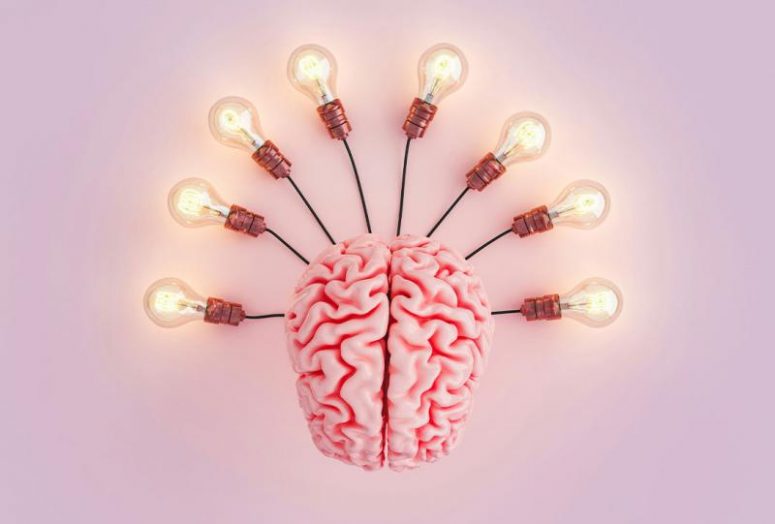
So how does that actually work? And more importantly, how can you bottle a little of that magic for yourself? Continue reading…
Courtesy Unsplash
As backed by the latest science, research, and my own personal experience.
1. Be grateful everyday. Gratitude shifts your focus from what’s lacking to what’s already good in your life. This re-trains the brain to see abundance. To do this, write down 3–5 things you’re grateful for every day. Be specific (“I’m grateful for my friend Sarah calling me today” instead of “I’m grateful for friends”).
2. Surround yourself with abundant thinkers. Mindsets are contagious. Being around people who think big and generously will naturally expand your worldview. So seek out mentors, peer groups, or communities that focus on hope, generosity, and growth instead of fear and competition.
3. Reframe limiting beliefs. Scarcity thinking is often rooted in subconscious beliefs like “There’s never enough” or “Success for others means less for me.” Instead, reframe any scarce thoughts like such as “I’ll never have enough clients” into positive ones like, “There are more than enough clients looking for what I offer.”
4. Give time, value, and compliments freely. Giving reinforces the belief that there’s plenty to go around. It’s a practical way to “prove” abundance to your subconscious. So offer your help, share knowledge, and give honest appreciation—without expecting immediate returns.
5. Visualize abundant winning. World-class athletes regularly do this, since visualization helps rewire neural pathways for optimism and opportunity. When comfronted with a challenge, spend 5–10 minutes visualizing your goals as already achieved. Imagine the feelings, details, and outcomes. See yourself overcoming your obstacles and incredibly the brain will follow.

Welcome back, hungry humans! This is Part 2 of my definitive Provo eats list. After dozens of meals, untold calories, and a lot of enthusiastic fork-dropping, here are 14 more unforgettable bites from a city that keeps outdoing itself. Let’s dig in. Continue reading…

Courtesy Shutterstock
Thanks for reading and sharing my latest clippings:

Courtesy Shutterstock
Rich people treat money differently than the average American — not necessarily because they have fatter bank accounts, but because of their mindset, habits, and access to resources. Let us count the ways:
- Invest early and consistently. Rich people often start investing at a young age and treat investing like a discipline. The average American may delay investing or only rely on savings, missing out on compound growth.
- Own assets, not just income. Wealthy people prioritize owning appreciating assets — stocks, real estate, businesses. Many Americans rely primarily on earned income (wages), which doesn’t build long-term wealth.
- Prioritize financial literacy. The rich actively learn about money, taxes, markets, and economics. Most Americans get little financial education and often avoid complex financial topics. Continue reading…

Lindsey and I are celebrating our 21st wedding anniversary this weekend. Outside of a bumpy first year, it’s been an amazing ride. Love you, Bella.

Courtesy Shutterstock
Happiness often has less to do with external circumstances and more to do with internal habits and choices. Here are 10 things consistently happy people tend to do differently than the rest of America:
- Practice gratitude daily. Happy people actively notice and appreciate what they have, often keeping a gratitude journal or reflecting regularly. Many people focus more on what’s lacking or what’s next, which feeds dissatisfaction.
- Prioritize relationships over possessions. They invest time and energy in deep, meaningful relationships — friends, family, community. Much of American culture encourages consumerism and career over connection.
- Spend money on experiences, not things. Happy people value memories and moments (travel, hobbies, shared meals) over material goods. Others may chase happiness through purchasing items, which only gives short-term satisfaction.
- Set boundaries and say no. They protect their time and mental energy, avoiding toxic people and overcommitment. Many people struggle with people-pleasing, leading to burnout and resentment. Continue reading…

Feeling bruised, battered, or beat down? That’s your brain and body waving a white flag. Chances are you’ve been pushing too hard for too long. Getting your groove back isn’t about cranking up the hustle—it’s about igniting your spark again in a way that actually lasts. Here’s what works, according to research and common sense: Continue reading…

Courtesy iStock
Hint: You have to do what the average person won’t.
Most people want to be “above average.” It sounds nice, doesn’t it? Better than middle grades. Faster than the herd. A little smarter, healthier, wealthier, and maybe even more likable.
But here’s the rub—very few people are actually willing to do what it takes. Why? Because standing out requires doing things the average person often skips. Not because they’re incapable, but because they’re distracted, tired, or content with just getting by.
The truth is… average is crowded. It’s busy hitting snooze, running late, winging it, avoiding hard conversations, scrolling aimlessly, and skipping the gym. If you want to rise above that—without burning out or becoming an unbearable overachiever—you’ll need to zig where most zag.
Here’s what above-average people consistently do to set themselves apart. Continue reading…

Courtesy Unsplash
As written by the world’s smartest computer: That’s a big question—and a fascinating one. After parsing millions of sources across virtually every domain, here are five profound things that emerge from the collective knowledge of the web:
- People everywhere want the same core things. Despite surface-level differences in culture, language, and politics, the web reveals that people everywhere deeply value: Connection (friendship, love, belonging), Security (safety, income, food, stability), Meaning (purpose, belief, legacy), Autonomy (freedom to choose, self-expression), Joy (laughter, art, music, nature). From Reddit threads in different languages to heartfelt YouTube comments and viral TikToks, the emotional undercurrent is startlingly consistent. Whether someone’s in São Paulo or Seoul, they’re often asking: Am I enough? Am I seen?
- The Internet is both a mirror and a megaphone. The web amplifies both the best and worst parts of humanity. Good: mutual aid, open-source collaboration, health information, education, activism. Bad: disinformation, harassment, extremism, polarization. What gets amplified isn’t always what’s most true—but what’s most engaging. That’s why the structure of social platforms matters just as much as the content they host.
- Every niche is a universe. If you can think it, there’s a community for it. People who collect vintage cereal boxes. Entire subreddits devoted to watching clouds. Niche debates over mushroom growing techniques. Forums on medieval sword-fighting or Tolkien’s elvish linguistics. These micro-communities reflect the internet’s beautiful chaos: it’s not one place—it’s every place.
- Truth is fragile with information overload. We now live in a world where facts can be buried under feelings, and information ≠ knowledge. Some key takeaways: Repetition can feel like truth, even when it’s false (illusory truth effect). Headlines shape perception more than full articles (and many don’t click). People often search to confirm, not to learn. The most powerful skill in the 21st century is discernment—knowing what to trust, how to verify, and when to question.
- The most helpful people are often unseen. Across platforms, some of the most useful and compassionate voices don’t seek attention, don’t go viral, and don’t get thanked. They fix inaccuracies on Wikipedia, soothe strangers in crisis on forums, share life-saving health advice in obscure threads, or teach complex math for free. The internet is quietly sustained by millions of invisible helpers—who restore your faith in humanity, if you know where to look.
It’s beautiful that we have computers capable of telling us so much about ourselves.
 I have a theory: the simpler the food, the harder it is to get right. Case in point—pasta aglio e olio. No cream. No meatballs. No tomato sauce or artisan basil drizzle. Just pasta, garlic sautéed in oil, and if you’re feeling wild, a pinch of red pepper and parsley. That’s it. On paper, it sounds boring. A last-minute pantry meal. The dish you make when you’re broke or out of ideas.
But when made well, pasta aglio e olio is nothing short of fantastic.
I first had it years ago in Naples, the spiritual home of carb-driven joy, served by a grandmother who looked like she’d personally invented garlic. I expected nothing. And then—bam. Flavor bomb. The roasted garlic infused every strand of al dente spaghetti with a subtle nuttiness. The olive oil coated my tongue with a smooth, silky richness. The crushed red pepper delivered just enough kick to remind me I was alive. It was rustic, honest, and quietly brilliant. Continue reading…

Courtesy Unsplash
Let’s be real: money can buy happiness—you just have to know where to shop. While everyone’s values differ, these are widely recognized as five of the best, most rewarding, and enriching ways to spend your money. Continue reading…

Courtesy Unsplash
Based on the most recent (2024) global data from the UN, World Bank, Pew Research, and WHO:
By region
- Asian: 59
- African: 18
- European: 9
- Latin American & Caribbean: 8
- North American (U.S. & Canada): 5
- American (U.S. only): 4
- Oceania: 1
By religion
- Christian: 31
- Muslim: 25
- Unaffiliated (atheist, agnostic): 16
- Hindu: 15
- Other: 7
- Buddhist: 6
- Non-Christian: 69
Living conditions
- Substandard housing: 20
- Illiterate: 14
- Malnourished: 11
- Near death (over 65): 9
- Near birth (under 5 ): 8
Education & tech
- Own a smartphone: 68
- Own a computer: 14
- Have a college degree: 7
Race & ethnicity
- Asian: 59
- Black: 17
- White: 10
- Latino: 9
- Mixed: 3
- Indigenous: 2
Wealth
- Americans (4 people) own: 35% of the world’s wealth
- So those 4 Americans own more than the remaining 96 combined.

Courtesy Unsplash

Courtesy Shutterstock
Every human needs a little help sometimes. Here are seven, science-backed ways to improve your mental health this year:
- Quit social media. While I’d encourage you to cancel social media altogether (the last 15 years have been amazing since I did so), I realize this is a huge ask. But in the very least, you should restrict your social media for maximum fulfillment, as I wrote in my best-selling book Log Off.
- Reconnect with a lost friend. Simply text or say the following: “I thought of you today and miss you. How are you?”
- Empathize with someone different from you. People with high levels of empathy tend to function better in society than those with low levels. So go out of your way to meet, learn from, and befriend people that don’t look, think, or talk like you.
- Stop thinking about work. It can wait until tomorrow morning or after the weekend. One of the best way to overcome this is to simply write down what you need to do and schedule time on your calendar to take care of it later.
- Make time for fun, mastery, social, and physical activities. You should be doing at least one of each every weekday, including fun things that excite you, cleaning or errands that make you feel good, excercize, and talking with your favorite people. If you’re the type that’s always helping others, carve out 20-30 minutes of “me time” everyday to reduce stress.
- Write a thank you letter. Gratitude increases happiness better than just about anything.
- Consider therapy. I’ve done this twice before and it saved my marriage and tempered my anger management. A good friend of mine is also visiting a therapist for the first time this year and loving it. I’m so fond of counseling that I’m gifting it to all of my kids and their spouses when they get married.

Courtesy Unsplash
At what I hope to be a little less than halfway through mortality, I’ve definitely begun to feel the onset effects of aging. Shrinking family. Thinning hair. Achy body.
Perhaps the biggest, though, is how much quicker time flies. Decades pass like years. “Recent” memories aren’t so recent. They’re downright old.
Although no one can literally slow time, each of us can slow how we experience it. Here are 10 ways for doing just that: Continue reading…

Diners wait for the best Italian of their life at Di Napoli (courtesy Blake Snow)
In my capacity as a travel writer to all seven continents, I’ve eaten some of the finest food on Earth. Seven course meals on the tippy top of the Eiffel Tower. Michelin star restaurants in the Italian Alps. Amazing home-cooked meals in Latin America and Africa. Several “What delicious thing did I just eat?” in Asia. And some of the best food in all of America—in Wisconsin of all places.
Although biased, I can honestly say that my hometown of Provo, Utah lives up to its reputation as one of the best, most diverse, and original restaurant scenes in the western United States. This summer, my family has been on a mission to try the very best restaurants for a roundup guide I’m penning later this fall.
Until then, here’s an overview of some of my favorites so far: Continue reading…

Courtesy Warner Bros.
Let’s get this out of the way: F1 is not just one of the best sports movies of the year—it’s one of the best movies, period. From the moment the engines rev in the opening scene to the triumphant, throttle-wide finale, this 2.5-hour cinematic joyride never stalls, sputters, or slows. If you’ve ever wondered what Top Gun would be like with wheels and European accents, look no further. F1 is the high-octane answer.
Much like the sport it celebrates, F1 starts grounded—intimate, character-driven, mechanical. But with each featured race, the cinematography accelerates into something grander, bolder, and borderline operatic. Director Joseph Kosinski (who also made Top Gun: Maverick) knows how to build momentum. By the time we’re swooping through Las Vegas and barreling down Abu Dhabi at 200mph, the visuals are so immersive, it’s like you’re strapped into the cockpit, white-knuckled and grinning. Continue reading…

Courtesy Unsplash
- Class is in session: With 1.5 million international students studying here every year, the U.S. is the world’s #1 campus. No other country even comes close.
- Basically a continent: America is the third-largest country on Earth. It’s nearly the same size as all of Europe—just with way more interstate highways and fewer castles.
- Olympic flex: No country has racked up more Olympic medals than the U.S. Ever. We don’t just play sports—we collect hardware.
- Money talks: The U.S. has been the world’s largest economy for over 150 years. That’s one and a half centuries of chart-topping GDP swagger.
- Tourist magnet: Roughly 80 million visitors a year can’t be wrong. The U.S. ranks third in global tourism behind France and Spain—and we’ve got pretty good croissant game.
- Biggest office ever: The Pentagon isn’t just the nerve center of the U.S. military—it’s the largest office building in the world, with a mind-boggling 6.5 million square feet of space.
Happy birthday, America!

Thanks for reading and sharing my latest work:

Courtesy Unsplash
Let’s be honest: most of us spend way too much time glued to our phones, tablets, and laptops. Whether it’s endless scrolling, binge-watching, or “just checking one thing,” screen time can creep into every corner of our day. Before we know it, we’re spending more time with our devices than with, well, real life.
But it doesn’t have to be that way. Cutting down your screen time isn’t about going full hermit and living in the woods (though hey, if that’s your vibe, go for it). It’s about finding a better balance—and making room for the things that actually excite you. Here are five tried-and-true ways to break excessive screen habits and live a fuller life. Continue reading…

Courtesy Shutterstock
Both to describe others and to shape more positive, meaningful interactions:
- Compassionate. Recognizes empathy and genuine care for others’ well-being.
- Gracious. Reflects kindness, humility, and generosity, especially in challenging moments.
- Curious. Celebrates an open mind and a desire to learn and understand.
- Resilient. Acknowledges strength in the face of adversity, both in ourselves and others.
- Genuine. Honors sincerity and being true to oneself.
- Thoughtful. Highlights mindfulness, consideration, and emotional intelligence.
- Generous. Emphasizes a giving spirit—not just materially, but emotionally and with time.
- Capable. Encourages confidence and affirms someone’s ability to achieve or handle things.
- Brave. Recognizes courage, even in small, everyday acts.
- Uplifting. Describes those who inspire, support, and elevate others.
BONUS: Vibrant—suggests being lively, spry, and energetic.
When used sincerely, these adjectives can foster connection, encouragement, and a more intentional way of seeing and describing the world.

The average American is exposed to 12 hours’ worth of information a day, according to one estimate. For any nerds in the room, that’s 34 gigabytes every 24 hours. A lot.
The problem with this excess is that it tricks our brains to biasly assume the data on our screens is more important than it really is. Since many of us ingest too much information, we live heads down more than we should. We connect less with and literally see less of the family, friends, and communities we live in.
This summer, I hope each of us will make a concerted effort to reduce this harmful exposure by deleting our phone alerts, both visual and audible if you haven’t already. I hope each of sets the lofty but healthy goal of spending no more than 1-2 hours on our phones each day. I hope each of us rekindles or takes on new hobbies that excite us to replace “heads down” bad habits.
Lastly, I hope each of us only reaches for our phones when we decide—never when the 12 hours’s worth of daily information asks us to. I believe we can do and hope you do too.

Courtesy Unsplash
- Time passes much more quickly than you realize.
- If you don’t take care of your body early then it won’t take care of you later. Your world becomes smaller each day as you lose mobility, continence and sight.
- Sex and beauty may fade, but intimacy and friendship only grow.
- People are far more important than any other thing in your life. No hobby, interest, book, work is going to be as important to you as the people you spend time with as you get older.
- Money talks. It says “Goodbye.” If you don’t plan your finances for later in life, you’ll wish you had.
- Any seeds you planted in the past, either good or bad, will begin to bear fruit and affect the quality of your life as you get older — for better or worse.
- Jealousy is a wasted emotion. People you hate are going to succeed. People you like are going to sometimes do better than you did. Kids are going to be smarter and quicker than you are. Accept it with grace.
- That big house you had to have becomes a bigger and bigger burden, even as the mortgage gets smaller. The cleaning, the maintenance, the stairs — all of it. Don’t let your possessions own you.
- You will badly regret the things you didn’t do far more than the things you did that were “wrong” — the girl you didn’t kiss, the trip you didn’t take, the project you kept putting off, the time you could have helped someone. If you get the chance — do it. You may never get the chance again.
- Every day you wake up is a victory. It’s never too late to become what you wanted to be or might have been if you start now.
© 2015 Twin Cities Public Television

Courtesy Daily Herald
My latest for Daily Herald (pdf). Thanks for reading.

Courtesy Lindsey Snow
While it’s true that the best things in life are free (i.e. love, family, friendship, deep conversations, the outdoors, gratitude, attitude, etc), for a few extra bucks, you can buy a lot of things that make you feel rich, even if your bank account says you’re not.
Here are 15 of those things: Continue reading…

Courtesy Unsplash
I do the following every time I book a hotel, which rarely takes more than a few extra minutes.
- Compare prices across booking sites (including hotel loyalty programs and “best” online rates, which aren’t always the cheapest)
- Take advantage of free amenities (breakfasts, lounges with snacks, fruit bowls, free water bottles)
- Understand cancelation policies and resort fees before booking
- Verify incidentals at checkout
- Check your bank account post stay to avoid non refunded deposits or incidentals
Happy travels!

This is a crazy story about a girl who was a household manager for an ultra rich American family from New England. So crazy they flew her halfway around the world while on vacation to bring them three small yogurts on ice, then didn’t even eat them!!
And here’s another fascinating story about a woman who makes a considerable income coaching people on decisions both big and small. (Spoiler alert: Less thinking, more doing generally results in better decision-making).
The way people make and spend their money is truly amazing.

Courtesy Shutterstock
- If you wake up feeling terrible, make your bed, exercise, shower, get dressed, and eat a healthy breakfast. Either this will fix the problem, or you’ll be in a better place to deal with it.
- If feeling low energy, take a walk outside or sit in direct sunlight. Both are proven to get you going.
- To get more done, start with your hardest task first thing in the morning when your focus, energy, and mental clarity are at their peak.
- As you plan your social calendar, remember: being with the wrong person is more lonely than being alone.
- Can’t decide if you are hungry? Ask yourself if you want an apple. If the answer is no, you are probably bored and not hungry.
You got this!

Courtesy Lindsey Snow
Over the last five years, I’ve written over 60 songs and have professionally recorded 45 of them across three albums and one extended play.
I’m biased, but with the help of my audio engineering brother-in-law (Hi, Adam!), the vast majority of those songs are radio-quality.
As my band is entering the recording studio this summer to record five more songs, here’s what each of my already released songs is about. Continue reading…

Courtesy Shutterstock
Thanks for reading and sharing my latest clippings:

Courtesy Luke Southern / Unsplash
Take care, gentlemen.
- Heart disease. The No. 1 cause of death for men, regardless of race or ethnicity, is heart disease. Compared to women, men are more likely to smoke, drink, and abuse substances. Heart disease hits men at an earlier age, and they are more likely to overlook nagging symptoms, work through discomfort, and avoid seeing a doctor for early detection.
- Cancer. After heart disease, cancer is the second leading cause of death among men. One in seven will be diagnosed with prostate cancer. Lung and colon cancers also disproportionately affect men, who have a higher cancer mortality rate than women. In addition to pride, financial stress is another big reason why men avoid getting age-appropriate screenings.
- Unintentional injuries. Following heart disease and cancer, unintentional injuries kill a lot of dudes. In fact, men are twice as likely to die from unintentional injuries than women, given their propensity to engage in riskier pursuits and jobs, and they are more likely to avoid safety regulations.
- Mental health. While younger men have made great strides in communicating mental health, many men still treat mental health as highly taboo. As such, they avoid therapy and commit suicide far more often than women. Furthermore, the financial stress of providing for one’s family results in higher rates of depression and anxiety among men.
- Less treatment. The U.S. Department of Health reports men are 24% less likely to visit a doctor annually. Many men view doctor’s visits as a waste of time and money, if they aren’t bedridden or exhibiting serious symptoms. But heart disease, cancers, harmful behaviors, and mental stress can all be reduced through annual doctor visits.
The more you know.

Paramount Pictures
Time flies if you’re one of the following: old, busy, or having fun. Here are two reasons why: Continue reading…

Courtesy Shutterstock
Happy Cinco de Mayo! Here are five facts about North America’s second best country:
- Mexico City is the oldest city in North America.
- Chocolate, corn, and tomatoes all originated from Mexico—thank God!
- Mole Poblano is the national dish, a dark sauce made of chilis and chocolate.
- The meteorite that theoretically wiped-out dinosaurs struck Mexico.
- Mexico is the most popular destination in Latin America (both North and South America).
Viva, Mexico!

Courtesy John McArthur / Unsplash
Last year, a travel editor I’ve written for at a prominent newspaper informed me that his publication would no longer accept pitches or promote destinations that require air travel. “Since commercial airlines create the majority of harmful climate emissions, we will only cover destinations within a three hour drive or train radius from now on,” he told me.
While I respect the noble intentions and free will of this newspaper to “save the world” in the way it sees fit, I also believe that avoiding air travel is even more harmful to humans than the legitimate and still mysterious concerns of global warming.
Over the last 75 years, world travel has lifted millions out of poverty. It’s grown to 10% of total global GDP. One in 10 humans work in travel, which on a global scale is only possible though commercial airlines. Canceling these modern wonders would not only wreck the world economy, it would impoverish people worldwide and shrink borders. That’s not sustainable.
While travel undeniably causes negative impacts on local, regional, and even global emissions, denying air travel is a short-sighted and poorly thought-out answer.

In no particular order:
- Making new friends
- Public speaking
- Saying “no”
- Negotiating
- Daily exercise
- Active listening
- Compromise
- Consistent sleep
- Taking criticism
- Budgeting money
- Avoiding scams
- Saying “sorry” and “I don’t know”
- Accepting a compliment
- Not allowing peer pressure or guilt decide for you
- Working hard (but not overworking)
- Expressing your feelings
- Staying in touch with loved ones
- Being nice to others who have little to no status
- Creating art
- Loving yourself and others

Once considered a cult pastime, video games have grown immensely in the last 40 years to become a mainstream fixture alongside movies and music.
But you wouldn’t know it by how often players finish their games.
In fact, the attrition (or bounce rate) of video games is pretty pathetic. “What I’ve been told as a blanket expectation is that 90% of players who start your game will never see the end of it unless they watch a clip on YouTube,” says Keith Fuller, a longtime production contractor for Activision.
That’s a lot of unfinished games. Continue reading…



