[youtube]https://youtu.be/XzKOwe6dYQI[/youtube]
Nine years ago, I stumbled upon an obscure YouTube video with only a few hundred views. Although I can no longer locate the video, the image it contained has haunted me ever since. A granite-green fjord flanked by towering cliffs, an enticing inlet, and an open invitation to hike it. I added the place to my bucket list and waited for the right opportunity to visit.
Three weeks ago, it finally happened. While on assignment for work (someone’s gotta do it!) and with my brother-in-law begrudgingly assisting, I hiked Western Brook Fjord in Newfoundland. Spoiler alert: It was everything I expected it to be. More beautiful than the already stunning photos of it.
I still don’t fully understand why word hasn’t gotten out; why more people haven’t visited it.
Well I hope to change that, starting with the above video and some feature stories to follow on not just the awesome hike, but the friendly locals, unexpectedly good food, and other exceptional adventures the island affords.
Make no mistake: I went for the fjord but left with a love for an entire province. I’ll be back.
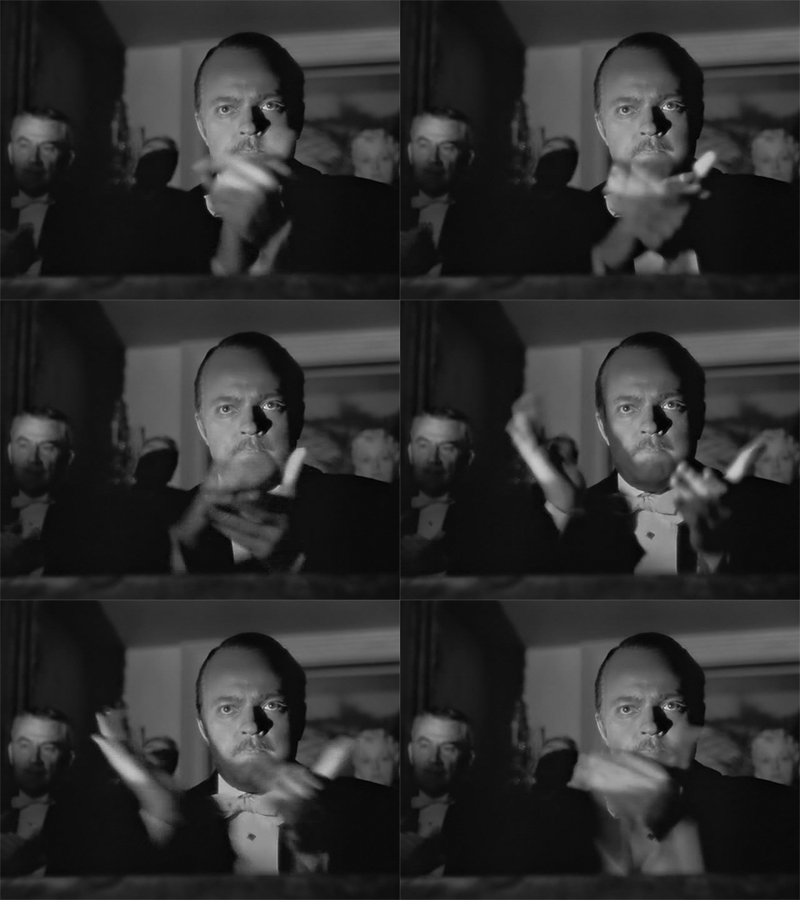
Last week while eating lunch with my family, my playful wife invented a new game called “Clap for [insert person’s name here].” It works like this. You prompt everyone to applaud someone for several moments. Then watch their face, eyes, and smile light it while you do it.
Even though the act is forced, the game works every time. At least it does on my family, my wife and I very much included.
The only way I can explain why it works is that recognition matters. Just hearing your name, being complimented, or even just having your presence recognized as the above game so deftly accomplishes is enough to make people feel elated and special. When that happens, we want to become better people. That’s powerful.
As silly as it sounds, I invite all reading this to play this game and report your findings. Like Dale Carnegie taught, praise people, even the slightest. Recognize their contributions.
But more importantly, acknowledge people by remembering their name, take a genuine interest in what interests them, and applaud them for being who they are.
It’s magic, I tell ya.

credit: blake snow
Perhaps one of the below might inspire your next offline adventure:
Paramount Pictures
I recently read Dale Carnegie’s popular How to Win Friends and Influence People. Here’s what I learned:
- Trying to understand people is more effective than criticism. Not only does it bring clarity, it breeds tolerance and kindness, which engenders people. So before criticizing someone’s effort or creation, ask them why they did what they did. See things from others’ viewpoints. As a born critic, this is difficult for me to do. But I’ve already seen how effective this is after using it on those closest to me.
- Smile when greeting and talking to people. This is a simple and powerful act. “The expression one wears on one’s face is far more important than the clothes one wears on one’s back,” Carnegie writes, this coming from someone who notes the power of dressing nice. And from someone who says “one” quite a lot. Continue reading…
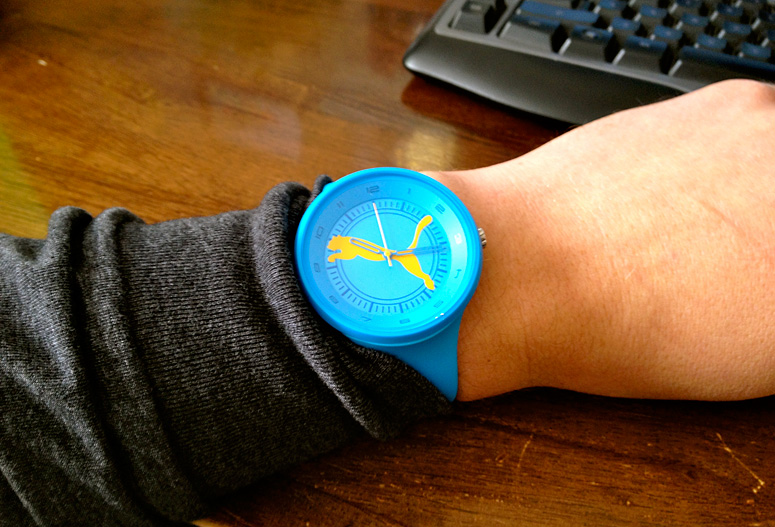
My wife taught me a valuable lesson recently.
For years, we’ve been planning to build a new house for our growing family. With that decision, we pegged a lot of other things to it, such as a new living room, new places to see, and even a family dog.
“Let’s update the living room after we move,” we told ourselves. “Let’s hold off on that vacation until we’re settled. Let’s wait for a dog until we have our own yard.”
We’ve held that belief for many years with various plans, not just shelter. Wait, wait, wait. When.. when… when… After, after, after. Continue reading…
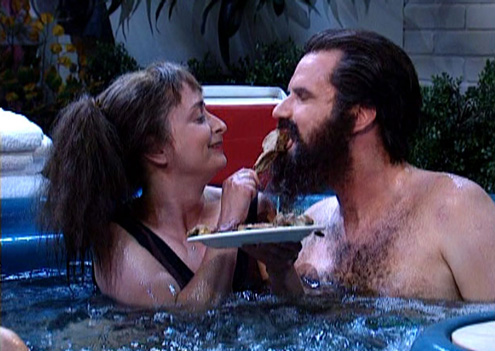
SNL
I recently sampled a book in which the author said such-and-such was the “second most enchanting thing” he’d ever seen, save only seeing his wife for the first time. The line made me reflect upon the first time I met my wife:
In a hot tub. Continue reading…
After 36 years of excruciating mystery, humanity finally knows how many people prematurely bite into Tootsie Pops, and how many licks it takes to reach the center. New research conducted by yours truly and NYU has the answers. Continue reading…
 I posses five and a half of the seven denominators of American millionaires, according to The Millionaire Next Door. Assuming each of these traits are weighted equally, I have a 79% chance (78.5% to be exact) of becoming one.
While the extra play money would be fun, I’m content with my thousandaire status. I have my health. I’ve got my soulmate. I found my calling.
I have five fabulous children, many uplifting friends, and a loyal dog. When kids ask me if I’m “rich,” I say yes, because I am.
Enough of the feel-good crap. A millionaire I am not. Let’s get down to numbers: Continue reading…
[youtube]https://youtu.be/JVARQXoUmNQ[/youtube]
From the “we live in incredible times” file comes… “When I was your age, we rode jetpacks at the lake!”
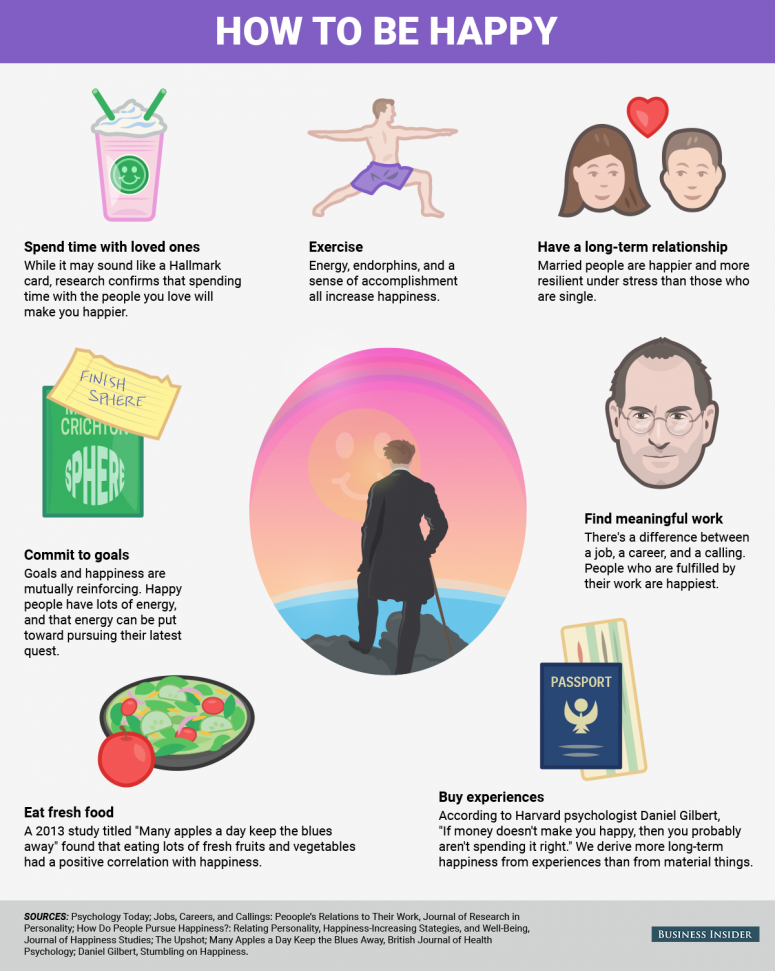
Good summation of advice that certainly mirrors my independent research. #bookmark
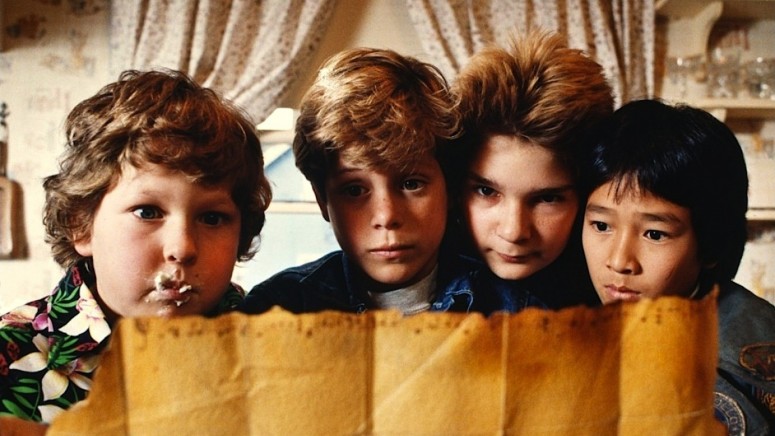
Courtesy Warner Bros.
My travel column entries from last month:
Feedback if you got ’em.

Credit: Business Week
I recently read Paul Ford’s special report on software—all 36,000 words and three hours of it. If you work in computers, you should read it. If you work in business, you should read it. If you’re an adult human, you will learn a lot about the way things are and where they’re headed by reading it.
Admittedly, the story could have benefitted from some additional editing. Ford, after all, veers a little off topic. But like Bill Bryson, Ford is a master at explaining why things matter—in this case, why coders matter, and how they will increasingly influence the future.
If that’s doesn’t convince you to read the article’s entirety, maybe my 10 favorite excerpts will: Continue reading…
 I’m grateful to my parents for teaching me basic personal hygiene. Things like regular bathing, brushing teeth, grooming, laundry, and hand-washing.
But in recent years, I’ve picked up new habits that have improved my life. My parents probably tried to teach me some of them. Others I discovered on my own or with the help of my wife.
Whatever the catalyst, all of the below have greatly improved my life:
- Relentless sun-screening. Several summers ago, I had an epiphany. I don’t think I’ve ever heard someone say, “I wish I hadn’t used so much sun screen.” Upon realizing this, I challenged myself to not get burned that summer, despite getting burned every prior summer through negligence (I’m a pasty caucasian). To beat the sun’s harmful rays, I applied sunscreen whenever I knew I would be exposed to direct sunlight for longer than 30-60 minutes. When swimming, for example, I reapplied often, several times an afternoon. Three months later, I conquered without getting burned once. And to my vain surprise, I was tanner than I’d ever been. Since that successful experiment, I haven’t been burned again, at least my skin hasn’t turned lobster, itched, or peeled. So remember: sunscreen only filters the sun’s harmful rays. It doesn’t block the good stuff like vitamin D and sun kissed skin. Continue reading…
It was my brother’s birthday yesterday. Rather than offer a lot of obligatory “Happy birthdays,” my siblings and I did this: Continue reading…

pixabay
I believe buying experiences is more fulfilling than buying things. Research proves this.
But sometimes things go a long way to enhance life, especially little things or anything that encourages experiences.
Here are five such things that have done that for me recently, in no particular order: Continue reading…
Just do it: @blakesnow. Don’t make him mad. You don’t want to see him mad.
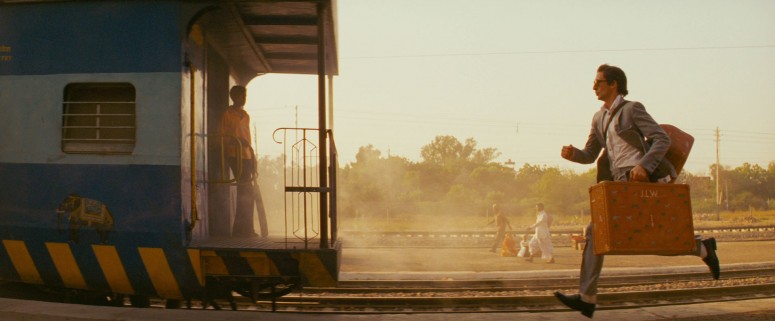
Courtesy Fox Searchlight
Last month I started a travel column for Paste Magazine. Here’s what I wrote about this month:
Thanks for reading.
Half of Americans say they lead “imbalanced” lives, according to a recent survey. I’m not sure if that’s better or worse than what I’ve anecdotally experienced. But it’s worse than other countries.
Of course, finding balance has always been a part of the human condition, at least since the industrial revolution, if not before—many recorded and Biblical accounts acknowledge this. Our imbalance plight accelerated in the ’80s, however, after we entered the information age.
Why does more imbalance exist in America than anywhere else? Continue reading…
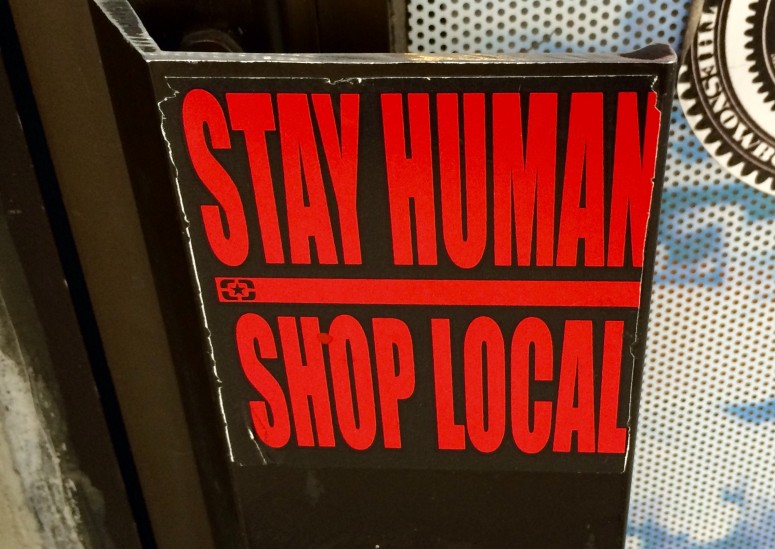
Taken at one of my local skate shops (Photo: Blake Snow)
Outside of groceries, my household shops online 90% of the time. That’s not me overstating something. That’s my wife’s estimate. She does the budget.
Over the last 10 years, Amazon Prime, Zappos, Target.com, iTunes, Netflix, and many other e-tailers have dramatically improved my family’s standard of living, product selection, and buying power, while reducing buyer’s remorse, time spent, and money spent consuming wants and needs.
Every now and again, I get romantic and decide to “shop local,” as they say. Usually I regret it. The last time I needed a pair of slacks, I went to a big box store. The style selection wasn’t what I wanted. 30 minutes of my life, gone.
Before leaving the parking lot, I launched the Amazon app, found a better pair of 4.5/5 star fitted-pants for less, and clicked “buy now.” The transaction took two minutes. The slacks would be on my door step two days later, and if, for whatever reason, I didn’t like them, I could put them back on my door mat, and a brown truck would magically return them for free.
We live a charmed life. Continue reading…

Photo: Lindsey Snow
I get paid to publish online stories. I love my job. But the harsh reality is my contributions cease to exist in the absence of power. Save for only a few printed artifacts, I don’t keep hardcopies of the hundreds of feature stories and thousands of blog posts I’ve written over the last decade.
I was humbled by that realization earlier this spring. The first two publications that ever paid me to write—Engadget’s gaming blog (Joystiq) and GigaOM—both shuttered within 30 days of each other. Their closures reminded me how impermanent life (and work) is. For now, my archives live on (here and here), but there’s no guarantee they’ll remain. They’ll be totally wiped out in a post-apocalyptic world like Mad Max: Fury Road (which you should run, not walk, to see right now).
Admittedly, I don’t sell life-altering work. I mostly help tech companies and media publications sell more widgets (i.e. products, services, or advertising) with believable stories that interest wide audiences. In any case, grasping your own insignificance is never easy. Big wheel keep on turning…
[youtube]https://youtu.be/8PUW2POEjX4[/youtube]
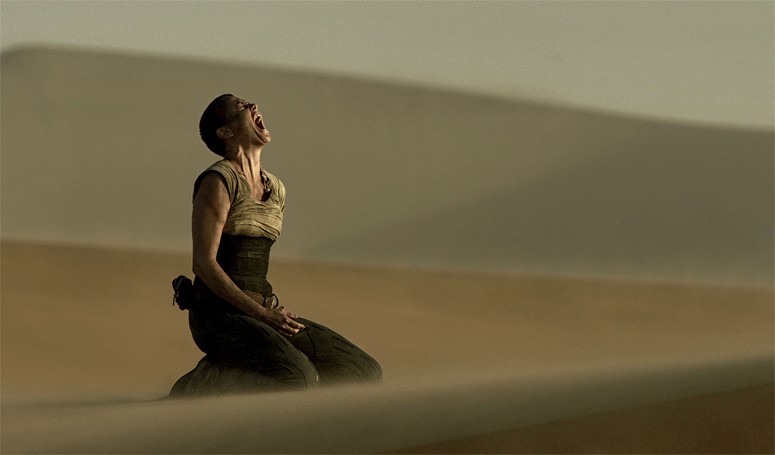
Photo: Warner Bros.
Brian Hamilton is head of a million dollar software company. He believes work-life balance is a myth. “Working obsessive hours is nearly a requirement for success,” he writes for Entrepreneur. “For those who feel possessed by entrepreneurship and want to get their idea or product out to the world, you can have work-life balance, as long as the two are one in the same.”
What Hamilton is describing is the trendy practice of anything-goes, work-life blending, which treats imbalance as a pipe-dream at best, a casualty of war at worst. To that I say: Keep telling yourself that. The only thing that seems to change peoples’ minds is a death bead. After not being true to oneself, overwork is the second biggest regret of the dying.
Deep down, I think even Hamilton and others like him know this. “The ability to compartmentalize and separate work,” he concedes, “probably leads to a much more content and happy existence.” But he, like many others, seems dead-set on wholly identifying with (or at least spending the majority of his waking time on) what he contributes economically to the world. Often times popular ego-feeding is to blame. Continue reading…

courtesy photo
Lindsey and I took the kids to fabulous Mesquite, Nevada last month for spring break. The city bills itself as “The way Vegas used to be.”
With only three casinos and extremely limited food options, I’m not so sure about that. But I was charmed by the place and plan on returning soon the next time I crave a desert oasis. Here’s why. Continue reading…
I have a confession to make: I like email. Here’s why. Continue reading…

 From the “never give up” files—Last month, I received a suprisingly condescending email in response to a story I was pitching. “Does this strike you as something we would publish?”
It was sent by a deputy editor from the nation’s third largest newspaper. “I was hoping it might it might fit your travel section, which I guessed you might oversee,” I replied. “Would you be willing to forward to the appropriate editor?”
The next day, the gentlemen apologized for being rude. But then he continued “in a spirit of friendliness” to list many greviences in a patronizing 350 word follow-up.
Continue reading…

Photo: Wikimedia Commons
I just started a new travel column for Paste Magazine. It’s called “Off the Grid.” You should read it.
First one up: 5 overlooked National Parks. To help you along the way, I’ll follow it up every week with all things awesome.
Thanks for reading (and for sharing if you like what you read).

Photo: Lindsey Snow
The young man was hiding something. Perhaps unknowingly, but he was still hiding something.
He had spiked hair with an Archie look to it, albeit dishwater blonde instead of bright. A little under six feet tall, he wore an oversized t-shirt and basketball shorts like something out of the ’90s—two sizes too big.
He was pigeon toed, around 175 pounds, and with a case of mild acne. I’m guessing he was 20, give or take a few years.
Why was I so concerned with this guy’s looks, especially as a heterosexual man in a public gym?
I’ll tell you why. Continue reading…
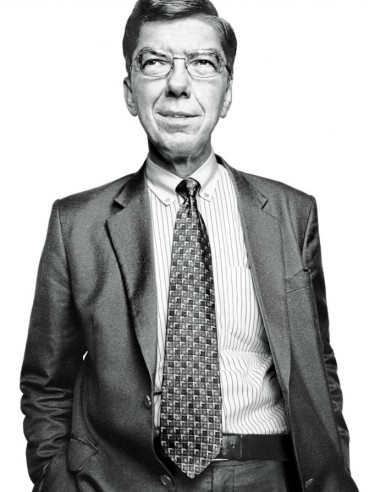
Photo: Platon/New Yorker
Clay Christensen, a man I deeply respect, has the answer:
“Christensen had seen dozens of companies falter by going for immediate payoffs rather than long-term growth, and he saw people do the same thing,” writes Larissa MacFarquhar for the New Yorker. “In three hours at work, you could get something substantial accomplished, and if you failed to accomplish it you felt the pain right away. If you spent three hours at home with your family, it felt like you hadn’t done a thing, and if you skipped it nothing happened.
“So you spent more and more time at the office, on high-margin, quick-yield tasks, and you even believed that you were staying away from home for the sake of your family. Christensen had seen many people tell themselves that they could divide their lives into stages, spending the first part pushing forward their careers, and imagining that at some future point they would spend time with their families—only to find that by then their families were gone.”
In other words, you become what you prioritize. Metamorphosis from sustained work-a-holic into a well-rounded and interesting person doesn’t just happen.
 As shared by Nikola Gjakovski; edited for potency:
- How old would you be if you didn’t know how old you are?
- Which is worse, failing or never trying?
- Do you push the elevator or crosswalk button more than once? Do you really believe it makes them faster?
Continue reading…

Newfoundland & Labrador Tourism
An edited version of this story first appeared on USA Today
North American is known for a lot of things. Transcendent, soaring, and gaping fjords isn’t one of them. For that, most travelers understandably head to Norway, New Zealand, or Chile first—all renowned for their glacier-carved “canyons” that outlet into swallowing seas.
But the northern half of the continent has its fair share of majestic cliffs cut by frozen (instead of liquid) water, especially in parts of southern Alaska and Canada. As a bonus, they’re more proximitous than Europe’s beloved Grainger Fjord, less travelled, and still rate at least 4.5 out of 5 stars, according to average visitor reviews on Google and Tripadvisor.
Behold, the most fantastic fjords of North America: Continue reading…
- Full head of hair. To all my bros (and any women) out there with thinning, balding, receding, or otherwise missing hair, I sympathize with you. I don’t know what it would be like without follicles. I imagine it’s drafty and uncomfortable. I’m grateful for a full coiffure.
- A titanium back. Six months ago, I had my lower back fused. Although my participation in high-impact activities involving running, jumping, and extreme bending have been cut short by two thirds a lifetime, I’m grateful for the $26,000 titanium rods, screws, and spacer that keep me upright and mobile now. With a new lease on life, I feel great. Continue reading…

Disney
ANAHEIM, Ca.—Comedian Jim Gaffigan once joked, “My favorite ride at Disney was the air conditioned bus back to the airport.” When asked why he paid so much money to wait in long lines for underwhelming rides, he replied, “Because I love my children.”
I love my children, too. But unlike Gaffigan, I’ve been unwilling to visit Disney until recently because I viewed it as a rip-off, an unneeded parental sacrifice, and not nearly as rewarding as natural wonder. Although I have fond memories of visiting Disneyland with my family as an eight year old boy, I have fonder memories of visiting the nearby Laguna Beach that same week. “So I’ll take my kids to more majestic, less expensive places instead,” I’ve told myself ever since.
Deep down, however, I wanted to know: Could so many people be wrong? Why do over 70 million folks visit one of Disney’s templated parks each year, making it the third most-visited tourist attraction on Earth, according to Travel and Leisure? Can a place that averages 4.5 out of 5 visitor stars really be an overpriced tourist trap?
To find out, I caved recently and booked my family for two-day passes to Disneyland. Tickets cost $100 each per day; children were $5 off (that’s it?!). In fact, admittance to the park totaled more than the combined airfare and four-day stay we paid for a well-rated hotel across the street, not to mention the expensive dining we were sure to encounter inside the park.
Upon realizing that, I had buyer’s remorse. Had I make a mistake? Was I turning into sheep? Maybe. But I was determined to find out for myself, if not for humanity’s sake. Continue reading…
Courtesy Apple
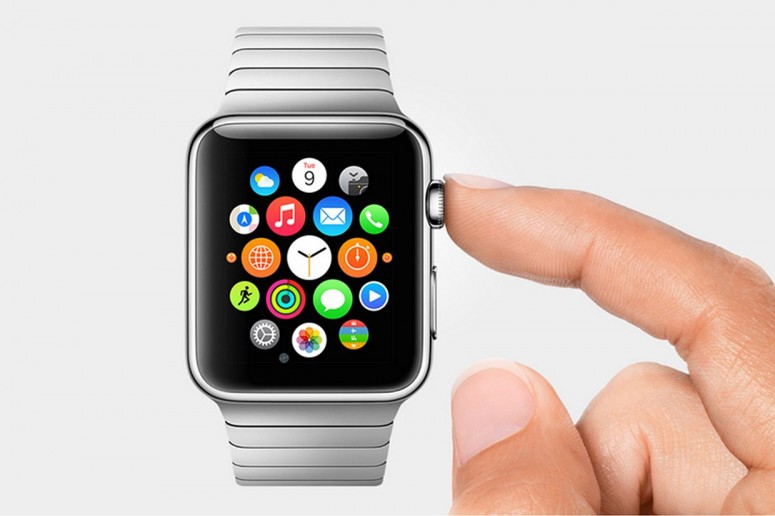
Constantly checking your wrist watch is less rude and less distracting than constantly checking your smartphone. It might even improve your life.
Or so says a report from Wired on why Apple chose to manufacture the forthcoming iWatch, which serves as a second, more accessible screen for your iPocket, I mean iPhone.
“Your phone is ruining your life,” writes David Pierce, who, like many others, ignorantly blames the object instead of the abuser. Rather than setting boundaries on his technology, Pierce and others like him egotistically search for reasons to be elsewhere in thought and suffer the consequence. Continue reading…
From the short and sweet files: “Man sacrifices his health in order to make money. Then he sacrifices money to recuperate his health. And then he is so anxious about the future that he does not enjoy the present; the result being that he does not live in the present or the future; he lives as if he is never going to die, and then dies having never really lived.”—Dalai Lama XIV
See also: American businessman misses point in life, hilarity ensues | more offline issues

20th Century Fox
I had a bad day last week. Or so I thought.
After an afternoon full of rejection, major story revisions, and haters hatin’ on my efforts,* I turned to my wife and said, “I had a crappy day at work and am glad it’s over.”
“I’m sorry,” she acknowledged. “Was it all bad?”
In truth it wasn’t. I had a great morning, a nice lunch, and the first hour of the afternoon was smooth sailing, I conceded.
She replied, “A friend and I were talking yesterday, and we decided that there’s usually no such thing as bad days, only bad hours.”
I quickly recalled all the “bad days” from recent memory and realized none of them were that entirely. While I’m sure I’ve had extended periods of bad hours, I don’t believe I’ve ever had a bad day from start to finish.
That’s probably the optimist in me speaking. But country songs are mostly fiction. Very few people (if any) people get divorced, fired, miss all their meals, and lose their dog in a single day.
In other words, “bad days” don’t exist, only bad hours.
* The kind that don’t know how to say “No, thank you” when presented with an opportunity and instead deride, heckle, or discourage you from finding a more suitable dance partner
New Line Cinema
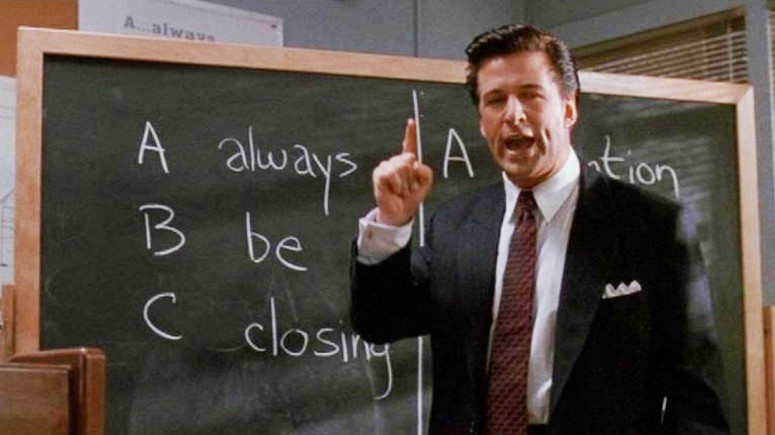
Selling is a challenge. It requires unwavering confidence, polite persistence, and a deep understanding of buyer demand. It also requires an ability to withstand constant rejection, unfortunate timing, and even bad luck.
Whether you sell to businesses or consumers, overcoming buyer objections in another challenge. Some may be unique to your trade, but most are quite common, regardless of industry. What are they and how can they be surmounted?
To find out, I ransacked dozens of reports, expert analyses, and top Google results. After the dust had settled, I encountered close to 100 specific objections. But most (if not all) of those are merely variations of seven fundamental objections, which I’ve distilled and categorized below.
Before getting down to the nitty gritty, a word of caution: sellers must first understand theirs and their prospects’ available “walk-away” options before addressing any concerns. If you don’t respect those, you’ll fail to appreciate the nuances of your market and have a harder time overcoming legitimate buyer objections.
Furthermore, “objections are a gift,” says Kyle Porter, CEO of SalesLoft. “It’s the customer telling you something that will help you sell to them.” In that sense, buyer concerns are rarely outright rejections—they’re merely requests for more information. Hence, good communication is key to overcoming them.
With that out of the way, here are the seven most common buyer objections and advice for overcoming them: Continue reading…
[youtube]https://www.youtube.com/watch?v=_MT_msVoRAg[/youtube]
My wife and I watched Atari: Game Over last night on YouTube (part II here). It’s an hour long documentary about the fast rise and even faster demise of video games in the early ’80s and the misinformation surrounding their fall (the games, not the decade).
That’s just the pretext, however. The documentary is really about hurtful group think, toxic urban legends, and the unfair, if not tragic, treatment of Howard Warshaw, a talented and pioneering game designer that was ostracized for his largely innocent role.
Although the documentary handles some weighty baggage, director Zak Penn keeps it fun, fast-paced, and peppered with likable characters. When Warshaw is partially redeemed by the end of the movie, I was rattled with sympathy.
Atari: Game Over isn’t as fist-pumping fun as Kong of Kong, which you should watch posthaste if you haven’t already. But the former is more accurate and just as endearing. Furthermore, it challenges the viewer to scrutinize their beliefs before accepting them and encourages us to give others the benefit of the doubt.
Five stars out of five.
[youtube]https://www.youtube.com/watch?v=ZKxNCNtMd0U[/youtube]
I learned to play guitar sometime in the spring of 1994. I did it in a single day. Sort of.
Although I knew how to mangle the open chords for A, C, D, E, and G in the months leading up to that fateful day, the instrument didn’t click with me until my brother and his friend Dylan Denny demonstrated how to play bar chords the night before. “You mean I just keep the same finger formation and slide up and down the neck to play any chord I like, even flats!?” I enthusiastically asked. “Yup,” they replied. “That’s the beautify of power chords.”
I was so excited by this revelation — this power, if you will — that I called in sick the next day (i.e. I faked a cough and my mom let me stay home from school).
Armed with this new “life hack,” I learned to play Green Day’s entire breakthrough album by ear that day. I was so elated, I didn’t even break for lunch, let alone breakfast. I just played, played, and played, stopping the CD only to find the right chord. I even learned a few of the album’s basic “fills,” or poor man’s solos, as I call them.
Upon returning from school, my brother and friend were impressed with my progress. It’s not every day a rhythm guitarist is born. From that day forward, I wanted to “play rhythm” forever.
That all changed on a Wednesday night 13 years later. Continue reading…
credit: lindsey snow
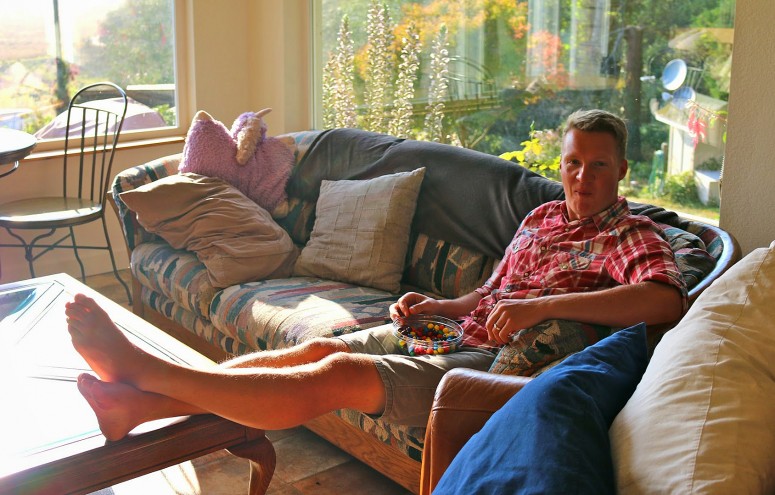
Bad habits. We all have them. Here are some of mine. But not for long. I’m not doing any of the following any longer. I’m done. For good. Watch me.
Continue reading…
flickr/creative commons
What do great speakers such as Martin Luther King, Steve Jobs, and top TED presenters have in common? Why do we remember phrases such as, “I have a dream,” “Getting fired from Apple was the best thing to happen to me,” and “Ask not what your country can do for you; ask what you can do for your country”? What’s the most effective way to persuade a listening audience, either to laughter, action, awareness, or inspiration?
After researching dozens of the Internet’s top search results from a broad range of expert or otherwise popular speakers, we have answers to those questions and more. Of course, there’s no foolproof way to becoming a charming or memorable presenter. But there are several virtues all great speakers uphold. Chief among them: Good orators change the emotions of their audience, rather than just informing them. They inspire them, encourage them to act.
Whether you’re motivating a distrustful audience, leading a team of individuals, selling the next big idea or product to market, or even entertaining a hard to please crowd, here are 10 qualities all good presenters posses: Continue reading…
Howard Gossage was revered for his copywriting skills
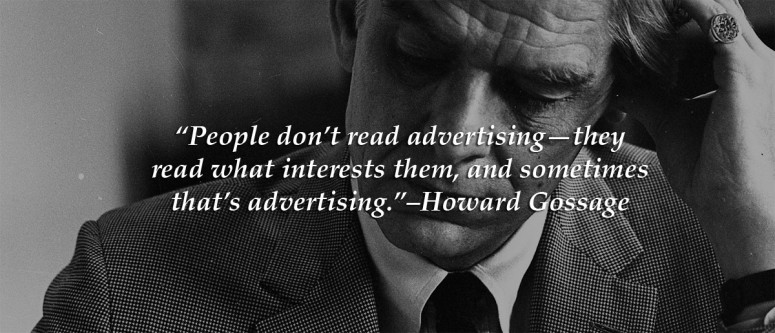
Most people don’t know the difference between copywriting and editorial copy. I write the latter, which is generally understood by plebians as long-form “magazine articles.” The former is short-form and widely used in advertising and marketing to persuade someone to buy a product or influence their beliefs.
In any case, I usually don’t copywrite in a technical sense. I sometimes get asked to but usually decline. Unless, of course, Nike asks me to, which they did last year. Here is that story. Continue reading…
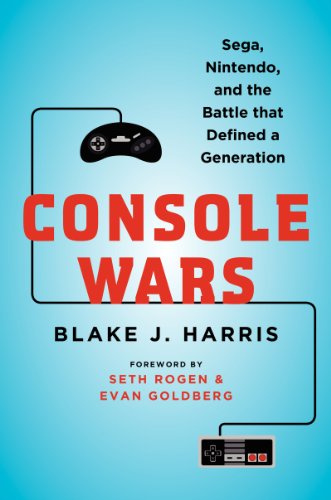 For any male readers born from the mid ’70s to early ’80s, listen up—Console Wars by Blake Harris has it all: your childhood, the answer to your next marketing challenge, cultural divides, innocence, under bellies, triumph, and loss.
It’s also the only book I’ve ever read that made me feel as young as I am old. Take these gems, for example:
- “There was no such thing as a magic touch, and it wouldn’t have mattered if there were, because the only thing it takes to sell toys, vitamins, magazines (or anything) is the power of story. That was the secret. That was the whole trick: to recognize that the world is nothing but chaos, and the only thing holding it (and us) together are stories… When you tell memorable, universal, intricate, and heartbreaking stories, anything is possible.”
- “Tony Harman was prepared to leave with his tail between his legs (smiling, though, as his thesis that western cultures can make great games too had made it all the way to the top), but he decided to try one more approach. “Let me just ask one more question,” he said, taking a step toward [Nintendo President] Yamauchi. “How many bad television commercials do we make each year?” Continue reading…
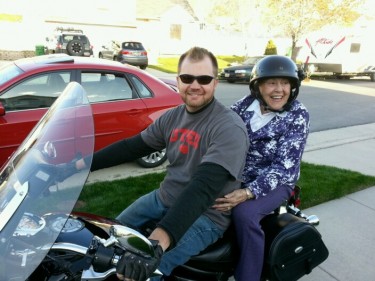
My wife’s grandmother, Beverly Ridd, was forever young
You wanna know what scares me most about getting old? Becoming calloused, jaded, and crotchety.
To counter that, I try to see the good in the world, surround myself with positive people, recognize the value of younger generations (as opposed to bemoaning their shortcomings), and do things that make me feel young again.
To help with the latter, TIME recently compiled a bunch of anti-aging activities backed by science. Here are a few that stood out: Continue reading…
The following have beguiled my eardrums lately: Continue reading…
Why do some people willingly participate in unpleasant things like regular exercise, cold showers, bland but healthy food, sacrificial restraint, and drinking lots of water, which cause a lot of annoying bathroom runs?
The short answer: Everything has a price. Good health is no exception. In exchange for long-term health, humans must endure short-term discomfort associated with the above.
In more succinct terms, “no pain, no gain.” That’s the catchphrase Jane Fonda popularized in ’80s workout videos to express that rewards are worth the work. Or as David Morris wrote in The Scientist, “The road to achievement runs only through hardship.”
In my experience, that’s the case for good health as much as anything in life. Of course, knowing that won’t make difficult things easy. But it does give them meaning, which I believe lessens suffering.

courtesy frank bourassa
What a story. What a character.
Wells Tower writes for GQ: “Frank paid a few visits to the U.S. Secret Service’s website, which, handily, offers an in-depth illustrated guide to serial numbers, watermarks, plate numbers, and all the other fussy obstacles to the counterfeiter’s art. ‘I thought, if I’m going to do this, I’ll go big or go home.'”
At the turn of the decade, the Canadian ended up printing more than $200 million in twenty dollar bills — an elephantine amount compared to most counterfeiters. “If he’d printed a measlier number of millions, he would have lacked a big chip with which to bargain for his liberty,” explains Tower. “He would certainly have been jailed longer. In other words, had Frank not gone big, it could have been quite a long time before he’d have been free to go home.”
Superb read. I highly recommend it.

Photo: Lucas Jackson/Reuters
I really, really like this moving photo compilation. It’s further proof that a picture is worth a thousand words. Thank you for compiling it, Mr. Uttpal.
Paul Ford shared some inspiring advice recently on being polite. He writes:
“Here’s a polite person’s trick, one that has never failed me… When you are at a party and are thrust into conversation with someone, see how long you can hold off before talking about what they do for a living. And when that painful lull arrives, just ask the other person what they do, and right after they tell you, say: ‘Wow. That sounds hard.'”
This works because everyone believes their job is difficult, Ford says, which is actually true when you consider their circumstances. “People silently struggle from all kinds of terrible things,” he continues. “They suffer from depression, ambition, substance abuse, and pretension. They suffer from family tragedy, Ivy-League educations, and self-loathing. They suffer from failing marriages, physical pain, and publishing.
“The good thing about politeness is that you can treat these people exactly the same. And then wait to see what happens. You don’t have to have an opinion. You don’t need to make a judgment.”
You just need to care, he concludes. You can start by looking others in the eye and asking their name with a smile and firm handshake. Then keep it up over time to ensure your politeness is enduring. After all, fleeting politeness is forgettable, Ford says. Lasting politeness is memorable and makes an impact.

credit: lindsey snow
Thanks to my wife, I’ve grown to appreciate winter instead of loathing it. Still, the persistent cold, dormant life, and extended darkness can take its toll on our mood, especially near the tail end of the season.
That said, here are four things everyone can do to beat the winter blues, according to USA Today:
- Volunteer, it will warm your heart. To get inspired, visit United Way.
- Eat healthy, from scratch foods; mostly plants, no seconds, but don’t vilify entire food groups (including sugar). The right nutrition can improve your mood.
- Schedule leisure. Lunch with friends, night out with a loved one, or your next vacation. Anticipating events does wonders for your mood. Planning yearly vacations in late January (after the tax man takes his cut) has served my family well.
- Get moving. Exercise is a dead horse. But I’ll kick it again, because it works. Don’t know where to start? Try a 20 minute outdoor walk everyday or the scientifically proven 7 minute workout.
See you in spring.


 To help my brain