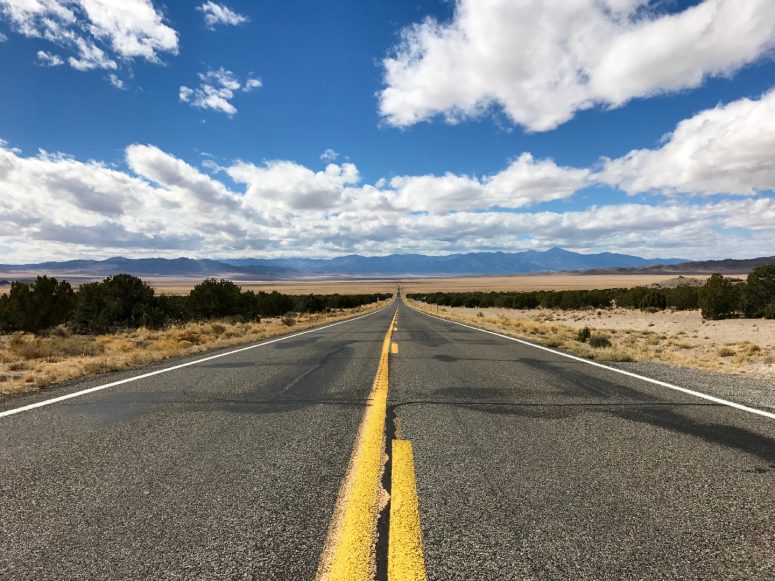
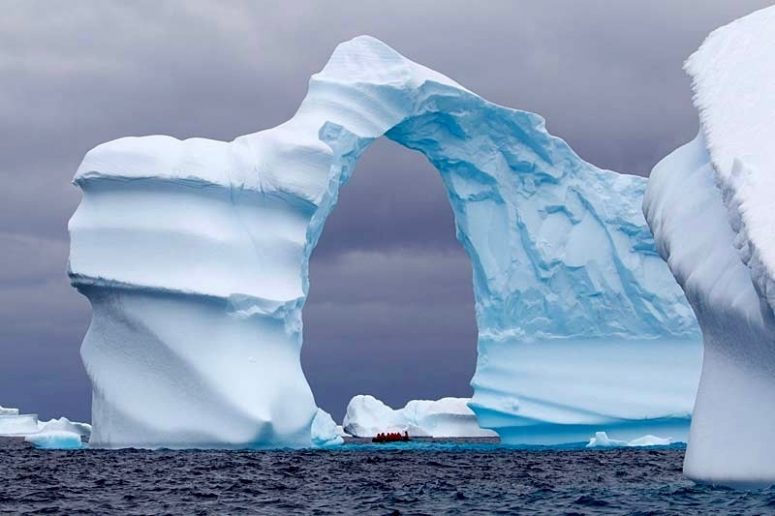
What luck we have. Not only were we born on the most marvelous planet in the observable universe—not to mention the only habitable one out of gazillions—but the one we did inherit has seven distinct, magnificent continents.
Picking just one experience from each that best personifies the greater landmass is an impossible job, not to mention totally unfair. But life isn’t fair. Nor is this column. If you need someplace to start when attempting to bag all seven continents, make it one of these iconic and universally well-rated encounters. Continue reading…
If you’re reading this, I’m guessing you like money. What does money have to do with offline balance, though?
In my research, everything. Next to fame and sex—which by no coincidence are often facilitated by money—the latter is arguably the most sought after thing in life, particularly (but not exclusively) for male species.
For purposes of this newsletter, however, I won’t preach to you on the ill-guided focus of money or bottomless cup that is greed. Instead, I’ll let smarter people do it for me: Continue reading…
I just published my first story for Frommers, the storied travel guide magazine that changed the way Americans traveled in 1957 after Arthur Frommer published his seminal Europe on 5 Dollars a Day.
My story isn’t that big nor will it make nearly as many waves, but I’m still proud of it and the friends that made it possible by joining me recently on a weekend backpacking trip into the High Uinta Wilderness, which I deem “the best western wilderness you’ve never heard of.”
Eight years ago, I began an endeavor that I thought would take up to 12 months to complete: writing my first book. In reality, it took nearly eight full years.
In any case, I’m happy to report that I finished the 12 chapter non-fiction and short self-help book not 20 minutes ago. I’m proud of what I wrote and can’t wait to share it with the world soon after vetting it with editors, agents, and publishers.
Fun fact: it took my seven years to write the first 40% of the book and just a month to write the remaining 60%—because writer’s block.
As a teaser, I’ve included the opening chapter here. Hope you enjoy it and share this post with any you feel my be interested in what I have to say. Continue reading…
The first was Frankenstein by Mary Shelley, recommended by my sister Sara. Not to be mistaken for the horrific name, popular movie, and Halloween theme it inspired, the book is actually about what it’s like to be human. Masterfully written by Shelley when she was only 20 (!), Frankenstein made my heartbreak and made me ponder humanity more than another other book recently (save for this, this, and this).
Due to a few slow pages and an ending that abruptly stops (like most classical literature), I award it four stars out of five.
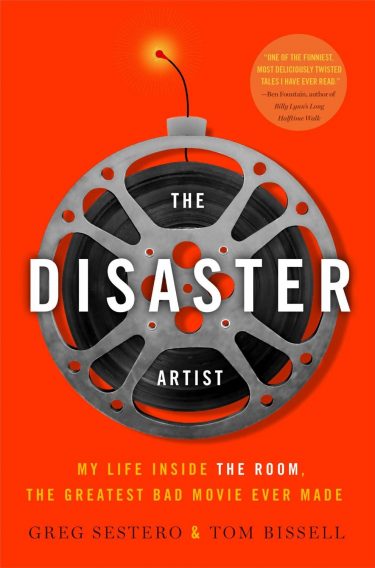
The second I read in less than 48 hours. It’s called The Disaster Artist: My Life Inside the Greatest Bad Movie Ever Made by actor Greg Sestero and journalist Tom Bissell. About the making of The Room (aka “The Citizen Kane of bad movies”), this book made me laugh out loud, cringe, and cheer on numerous occasions. I admire Sestero for his candor, for seeing the good in the world, for sharing his story, and for shining the spotlight on the conflicted, inspiring, and likable man named Tommy Wiseau. “What a story, Mark!”
For its hilarity and heart, I award it four stars out of five and anxiously await the movie adaptation starring James Franco.
An edited version of this story first appeared on April 5, 2016 in The Atlantic
Not long ago, I stumbled on a list of the best sci-fi novels according to the Internet (i.e. the highly entertaining computer geeks on Reddit). As someone who reads for pleasure as much as job security, I decided to finish as many of these and others that I could handle.
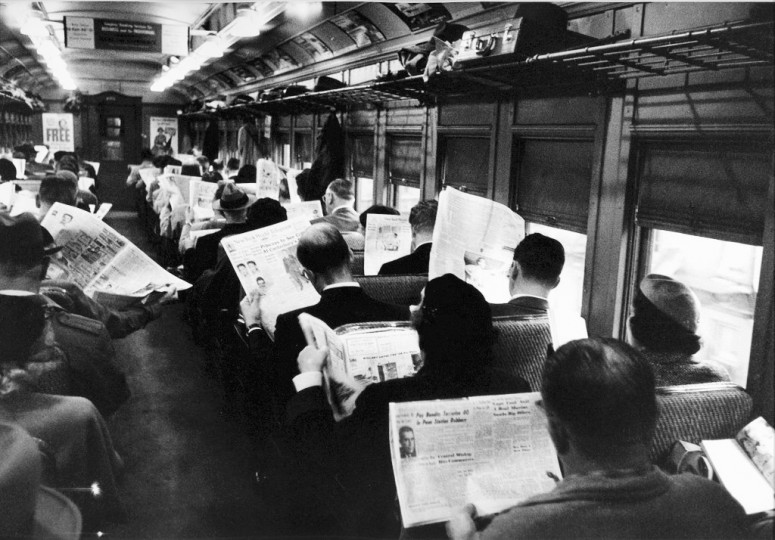
After completing over a dozen—not to mention many more in film adaptations—the following occurred to me: every single one of these acclaimed, futuristic stories—at least the many I was exposed to—completely missed the existence and impact of the Internet. Everything from published media and daily communication, to realizing sight unseen romance and access to global markets.
Why?
“A lot of science fiction was primarily focused on moving people and things around in exciting ways,” says technology commentator Clive Thompson. “These forward-thinkers were using flashy visuals to hook their readers, while understandably overlooking non-sexy things such as inaudible conversations.”
Which is largely what the Internet facilitates. Like electricity, it’s really just an everyday utility now. And utility talk is not plot. It’s boring. Continue reading…
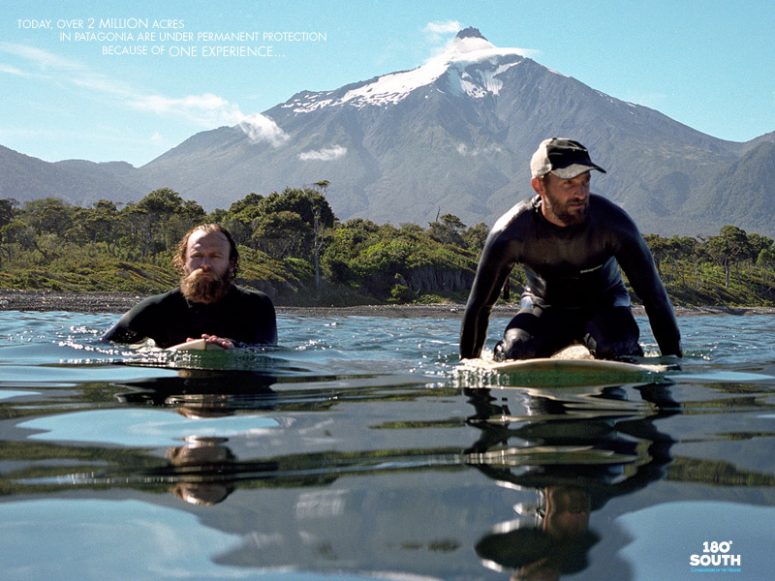
I recently watched 180 Degrees South. It’s an enjoyable documentary by surfer, climber, and conservationist Chris Malloy, in which he follows the adventurous footsteps of his two mentors—Patagonia founder Yvon Chouinard and North Face founder Doug Tompkins.
Last month, Paste Magazine unexpectedly and suddenly shuttered their travel section and (along with it) my weekly column. After 126 consecutive and wonderful stories, the news was devastating.
More than just money (which admittedly wasn’t much), the perk-filled gig served as a weekly source of education, inspiration, and a renewed understanding of writing for mainstream audiences again. Furthermore, it took me and sometimes even my friends and family to five different continents, dozens of countries, countless destinations, and introduced me to hundreds of interesting people.
Although I’ve yet to find a replacement, I have some promising leads for the unpublished and upcoming articles in the pipe. And I’m determined and confident that I’ll be able to find a new suitor for my column, which was read by over 900,000 monthly individuals, according to a November 2016 estimate by the nation’s fourth largest tourism board (i.e. Visit Orlando).
Until then, here are the stories I am most proud of—the best of my travel column so far: Continue reading…
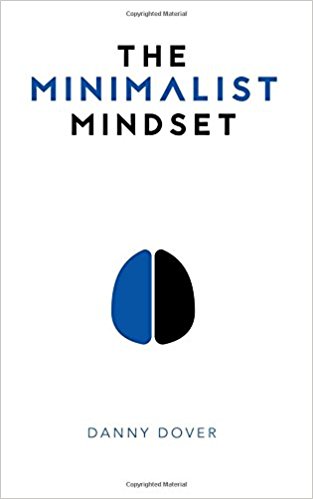
Earlier this year, I skimmed The Minimalist Mindset by Danny Dover. In my case, Dover was preaching to the choir. But I did enjoy two important points:
Every living human being shares the same two overarching limitations, time and money. You can trade time for money (we call this a job) and you can trade money for time (we call this convenience). Harmonizing these two resources leads to maximum enjoyment of life.
When prioritizing our time and expenses, we must consider their significance as much as their importance and actual cost. In other words, ask yourself “How long will this matter?” For better fulfillment, we must prioritize our commitments and expenses from most significant to least. Similar to what Rory Vaden linearily argues in Procrastinate on Purpose, “Spend your time on things today that give you more time and a better life tomorrow.”
That said, I don’t endorse Dover’s recommendation to auto respond to all incoming emails with “I’m booked solid with previous commitments.” That’s a dick move. Just say, “No, thank you.” But I do like his recommendation to ask for a timed agenda before agreeing to a meeting and keeping meetings to a single day or slots per week (i.e. late afternoons only).
I did it again. I came oh-so-close to finishing a really long and critically-acclaimed literary classic before quitting it after three quarters completion.
I first did this 10 years ago with the unabridged version of The Count of Monte Cristo, a book by the masterful Alexander Dumas that features some of the most beautiful, if not poetic, prose I’ve ever had the pleasure of reading.
I did it again this spring with Leo Tolstoy’s Anna Karenina—an even more powerful book—which is widely regarded as the greatest novel ever written. So why did I abandon it after 640 pages out of 864 total? Continue reading…
There are a lot of productivity myths. For instance, early birds are more productive, structure kills creativity, adding resources increases output, and more. Although well intentioned, these are all wrong.
So what works? What productivity hypotheses have been tested and proven by science? After sifting through dozens of top search results, reports, and studies, this is what I found. The most convincing, substantiated, and established productivity strategies: Continue reading…
Most of it relates to typos. Some of it relates to disagreement or additional viewpoints. On occasion, I even get fan mail—how lovely.
As for typo-related mail, most of that is really nice. “Hey, Blake. Enjoyed your story on [insert popular story here]. Noticed a typo, however, and thought I’d share.”
Some of it gives me the benefit of the doubt. “Hi, Blake. Perhaps your spellcheck mistakenly changed ‘espoused’ to ‘expelled’?”
“No, kind reader,” I’ll reply. “My bad diction stuck again. Thanks for keeping me honest.”
Still, some of the mail I receive is unforgiving. As if my mistakes should disbar me from contributing to mainstream media. As if I should master English before using it to articulate a point, tell a story, answer a question, or inspire change. Continue reading…
For one reason or another—both personally and professionally—these companies can do almost no wrong in my eyes:
Dell. I built my first computer as a freshman in high school. Overclocked it, modified it, loved it. Later on, I built several more for family members. And then made-to-order Dell took over the world by the late ’90s. I enthusiastically appreciated their customization, affordability, and no-nonsense style. A decade later, Dell officials hired me as a contract writer for three consecutive years. That engagement largely paid for the downpayment on my first and only house. Although they’ve changed significantly since the ’90s and I now compute on a Macintosh, I still admire them. Continue reading…
While on vacation this summer, my family stayed at a Hampton Inn in Gallup, New Mexico.
At breakfast the following day, my five year old daughter couldn’t stop gawking at an under-clothed woman seated at the table next to us. “Why is that lady showing her belly?” she loudly inquired. A little embarrassed, Lindsey and I told her to stop starring and eat her breakfast.
Admittedly, I think everyone in the room was a little uncomfortable and probably judgmental. But for the most part, everyone carried on and we had an enjoyable breakfast.
As we were finishing up, the lady approached our table. Looking at Lindsey and I with a gentle smile, she said, “You have a beautiful family.” She then turned and offered the same smile to each of our four children. It was the nicest compliment and gesture anyone has paid to me all summer, if not all year.
So thank you lady from the Hampton Inn in Gallup, New Mexico. Thank you for your unexpected example of kindness, friendship, and reminding my family never to judge a book by its cover.
Get happy yourself. How happy you are dramatically affects how happy and successful your kids are. So plan time each week to nurture your own relationships and hobbies.
Teach kids to build relationships. Encourage them to invest in relationships and perform small acts of kindness to build empathy.
Expect effort, not perfection. Banging the achievement drum messes kids up. The research is very consistent: praise effort, not natural ability. Continue reading…
It’s been a superb year for new music so far. Along with a strong finish of releases last year, these are the albums worth writing home about—and ones I hope you’ll consider in your search for new, inspiring songs from new or rejuvenated blood.
Gone Now by Bleachers
Behold: this is art. From front to back, singer/songwriter Jack Antonoff (aka Bleachers) channels brilliant beats, catchy choruses, and melodic instrumentation in classic stereo. If this masterpiece doesn’t finish as album of the year, I’ll be delightfully surprised. Continue reading…
How can we stop such trends toward dishonesty (in this case, broader acceptance of illegal downloading)? The problem is that if someone has acquired 97% of their music illegally, why would they legally buy the next 1%? Would they do it in order to be 4% legal? It turns out that we view ourselves categorically as either good or bad, and moving from being 3% legal to being 4% legal is not a very compelling motivation.
This is where confession and amnesty can come into play. What we find in our experiments is that once we start thinking of ourselves as polluted, there is not much incentive to behave well, and the trip down the slippery slope is likely. This is the bad news. The good news is that in such cases, confession, where we articulate what we have done wrong, is an incredibly effective mechanism for resetting our moral compass.
Humans are more distracted now than ever before, at least since we’ve started keeping records. Over the last decade, the average attention span has dwindled from 12 seconds in 2000 to just eight seconds in 2014, according to the U.S. Library of Medicine. The kicker: our eight second attention spans are one second shorter than a goldfish’s. No joke.
Who or what’s to blame for such abhorrent focus? “External stimulation,” says the Library of Medicine. That’s code for mobile internet, apps that vie for our attention, push email, social media alerts, work from anywhere, persistent connectivity, and our enthusiastic adoption of “the internet of things.” In other words, the only person we can blame is ourselves.
What’s a working professional to do then? You have three options, according to popular thinking: fall off the grid, stick with default technology settings for substandard productivity, or my personal favorite, set usage boundaries to upgrade concentration, contributions, and welfare levels.
For those interested in options one or two, this article won’t be any help. But for for those interested in the latter, there’s quite a lot you can do to stay focused in a 24/7 world. After extensive online research, here is the most celebrated and pragmatic advice for doing just that: Continue reading…
I’m planning an upcoming story on some of the best desktop upgrades you can make but had to break to excitedly endorse these: The Klipsch ProMedia 2.1 speakers. They are THX certified and they sound magnificent.
If you’re a music lover, I think $150 is a small price to pay. These speakers have awakened my ears and made old music sound new again and new music sound even brighter, tighter, heavier, and clearer without the muddiness associated with most desktop speakers.
My family and I encountered the pictured sign recently while biking our river trail. Immediately the older children collectively remarked, “That’s sad.” My wife and I agreed. So we went home, grabbed some spray paint, and returned to censure the offending message and alert the authorities to replace the defaced sign.
By the looks of the handwriting, the up-to-no-gooders were probably teenagers and likely less-educated. Young minds exploring anti-social behavior rather than full-blown racists. Nevertheless, the words still stung. But I was proud of my children’s response. Not anger. Not over-reaction. Just concern and an immediate quest to right the wrong. Continue reading…
The book reviewer at Green River Overlook in Canyonlands
In addition to books for young and adult readers, my family buys a lot of picture books. We have three shelves packed tight with them and three overflow stacks spread across the rest of the house.
For years I’ve wanted to catalog my favorites but never got around to it. So this spring, I hired my nine year-old daughter to do it for me.
After reviewing well over 100 children’ books, these were her favorites rated 4.5 out of 5 stars or better: Continue reading…
“For many of you who don’t have it all figured out it’s okay, that’s the same chair that I sat in. Enjoy the process of your search without succumbing to the pressure of the result. Trust your gut, keeping throwing darts at the dart board, don’t listen to the critics, and you will figure it out.”—Will Ferrell
Best-selling author Marshall Karp used to work in advertising. But then he realized he didn’t like what he was doing because the original architect was a lousy planner.
“This rut that you’re stuck in, this life that you’re trapped in, who planned it?” he writes on Quora. “Not you. Most of us form our life’s plans shortly after high school. I was pushing 40 and still living the dream of some teenage kid.”
So he decided to switch careers and become a screenwriter and author. “My Act Two was conceived, written, produced, and directed by an adult. And I’m grateful for the insight that convinced him to take on the job.”
My wife and I were discussing gender equality over lunch today. On a scale of 1–10 (one being female dominate and 10 being male dominate), we both agreed that America today is probably around a 6.5/10 in favor of men.
That might vary a half point in either direction depending on what part of the country you live in. But overall I think that’s a fair assessment.
What will it take to get to an equal five? Two big things: equal pay for the same job and greater access to leadership roles. I’d also add being able to walk alone a night without fear of being assaulted, but my wife said that’s a tricky one. After all, how much of that perceived inequality is unfounded fear versus actual threat?
Either way, I’d say things are looking up for my daughters, wife, sisters, and mother and hope to be at or around a five within 10–20 years. What do you think?
Before I write another word, let the record show that I admire, appreciate, and even covet Tesla cars. Their instant torque, modern styling, simple engines, and overall innovation are a thing of beauty.
But there’s a fundamental problem with electric vehicles today: they’re all powered by dirty energy and heavily subsidized by government incentives, argues Berkeley physicist Richard Muller. “There is little to no environmental benefit, since in most of the world the electricity is derived from coal,” he writes. In fact, “an electric car in China produces more CO2 than does a gasoline car.”
Even in states such as California, where only 25% of their energy is renewable, we’re still along ways from sustainably clean cars. Obviously, we’ve made progress and don’t want to throw out the baby with the bath water. But Muller brings up a good point: Is 100 mpg gas mileage from combustable engines (which we’re approaching) more environmentally friendly than a 250 mpg coal-based electric vehicle?
For the time being, Muller argues no. “Prices of batteries have come down, but not nearly enough to negate the high cost of owning such a car.”
All of that could change, of course, with breakthrough gains in battery storage or clean energy. But for now, we’re still in the “Kickstarter” phase of electric vehicles. Exciting but not fail-proof.
Since the turn of the century, Platon has made a name for himself (a single one at that!) for his telling portraits of celebrities, especially politicians. As a fan of his work, these are my favorites: Continue reading…
I wholeheartedly agree with Cal physicist Richard Muller’s optimistic and informed answer to this question.
“Global warming does not threaten humans with extermination,” he writes. “In the history of the world, I would say now is the best time to be born. The problem of global warming is minuscule to the dangers faced by my parents when then had me (i.e. world wars, more tyrants, worse civil rights for minorities and women, more violence, poorer health, less economic wealth). We will handle global warming through mitigation and adaptation. Don’t deny your future children their opportunity to enter this wonderful world.”
I don’t think Muller, I, or any other optimists are delusional in that outlook. After all, history is on our side—humans are survivors, tinkerers, and self-improvers.
Statistically we’re collectively better off now than ever before. Read and try to refute this if you don’t believe me. There’s no looming threat suggesting others—only unfounded human fear, old age, or alarmists rooted in emotion (or self interest) rather than fact.
To find out why we’re quitting, what we learned, and what’s the future of manliness, listen here. Thanks to everyone who listened to, supported, and funded the show. I will miss it and hope you enjoy this last episode.
An estimated quarter of the world’s population doesn’t eat pork—mostly for religious but also for vegetarian reasons. Why?
“Islam and Judaism both originated in a region where pigs were scavengers and rooted through garbage to survive,” explains Jeff Dege on Quora. “They were unclean in every sense in that environment.”
On the other hand, Western civilizations are more accustom to non-scavenger or otherwise domesticated pigs that aren’t as infected as the ones the Middle East grew up with.
“If I lived in the Middle East 1500–200 years ago, I wouldn’t have eaten pig, either,” concludes Dege. “But I don’t and the reasons for avoiding it then and there don’t apply here and now.”
Which explains why the other three quarters of the world happily consume pork, mostly for barbecue, bacon, sausage, and chop reasons.
On a personal note, I rank edible animal muscle as follows—beef > poultry > pork > fish—but I try to limit my intake of it to no more than 2-3 times a week in favor of produce.
Here’s a great quote from Cal physicist Richard Muller on the scientific method: “I see the difference between a scientist and a non-scientist in a simple way:
A non-scientist is easily fooled and particularly vulnerable to self-deception.
A scientist is easily fooled and particularly vulnerable to self-deception… and knows it.”
If you avoid distinguishing beliefs and bias from knowledge, you’re not a scientist. If you overstate the truth (even for the greater good), you’re also not a scientist.
True science demands objectivity, guts, free speech, vulnerability, and lots of “we’re still not sure but let’s keep checking.”
Phil Knight seemingly had a lot of slick editors to help him write his wonderful book (4/5 stars) on the creation and rise of Nike. But his passion, character, and insightful war stories all ring true. These were my favorite excerpts:
What if there were a way, without being an athlete, to feel what athletes feel? To play all the time, instead of working? Or else to enjoy work so much that it becomes essentially the same thing.
Every runner knows this. You run and run, mile after mile, and you never quite know why. You tell yourself that you’re running toward some goal, chasing some rush, but really you run because the alternative, stopping, scares you to death.
The Japanese believe climbing Fuji is a mystical experience, a ritual act of celebration, and I was overcome with a desire to climb it, right then. I wanted to ascend into the clouds. I decided to wait, however. I would return when I had something to celebrate.
After shaving, I put on my green Brooks Brothers suit and gave myself a pep talk. You are capable. You are confident. You can do this. You can DO this. Then I went to the wrong place.
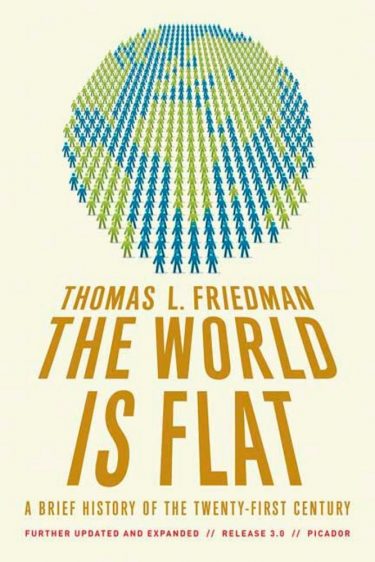
With notable exception to most of Africa, the global economic playing field has been flattened (i.e. the world is flat)
Giving people remote access to collaborative tools, search engines, and billions of pages of information ensures that “the next innovations will come from all over Planet Flat.”
True education teaches students how to develop inquisitive minds (i.e. be curious, absorb as much as you can, seek answers to questions that inspire you)
America is losing its competitive edge of trust, stability, and entrepreneurial infrastructure (i.e. “its secret sauce”) because it’s increasingly becoming entitled, lazy, and out-collaborated by hungrier nations, Friedman argues. It also succumbed to fear-mongering after 9/11 instead of focusing on optimism and hope as it had done so well up to that point.
Globalization winners take care of their own, but they are also compassionate and considerate of others, not protectionists playing an illusionary zero-sum economic game (i.e. domestic manufacturing jobs).
Economic success is the result of hard work, thrift, honesty, patience, tenacity, and openness to adapt from others (i.e. “glocalization”)
Authoritarian Muslim countries (e.g. Egypt, Syria, Saudi Arabia, Pakistan, ISIS) have struggled to adapt to a flattening world because they don’t “glocalize.” More tolerant India, Turkey, Lebanon, Bahrain, Dubai, Indonesia, and Malaysia are notable exceptions to this rule, Friedman argues.
The roots of terrorism are based on religious fanaticism and an education system that condemns Western decadence to create an atmosphere of intolerance (rather than a “live and let live” mindset).
Although the U.S. still benefits from being the most dominate popular culture, globalization is is not the same as “Americanization” or American imperialism.
No two countries that are part of a major global supply chain, such as Dell or McDonald’s, will ever fight a war against each other so long as both remain in said supply chain (i.e. money talks more than peace talks).
Despite Friedman’s verbose and scatterbrain writing, his insights deserve four stars out of five.
I’m an enthusiastic Amazon, Apple, Uber, and Google user because they make my life easier. I don’t think twice before upping my Prime membership. In fact, I like these companies so much, I’ve even willing to pay a little extra for the convenience they offer.
But obsessive brand loyalty will ultimately hurt us, argue two ivy-league economists for USA Today. “Each of us can do our part to make sure Amazon and others never get to the point of ubiquitous domination. It might introduce a bit of hassle and inconvenience into your life, but only a tiny bit. But by taking on this challenge, you’ll be doing the job that antitrust authorities, in an ideal world, might take care of on our behalf – ensuring that consumers and workers, rather than the owners of capital and algorithms – get a piece of the surplus that’s created by new business ideas.”
Make no mistake, I’m a proud American capitalist. But I like it even more when companies compete for my business. “Think about those credit card teasers we all get,” the authors add. “As long as we keep businesses thinking they need to chase after us to try to lock us in, they’ll keep on handing us value rather than using it to pad their bottom line.”
If you agree, consider shopping with competing companies and platforms from time to time to keep your favorite companies on their toes, hungry for your business, and willing to let you keep a greater share of the value.
Clouds from my plane window somewhere over Nicaragua (courtesy Blake Snow)
My respect for clouds skyrocketed last year on two separate occasions.
The first was while flying home from France after hiking Mont Blanc with my long-time friend Wesley Lovvorn. Despite being about the same elevation as my beloved Wasatch Mountains, The Alps appear 2000-4000 feet taller due to greater topographical prominence. That is their valley floor is about 2000-4000 lower than the 4400 feet I live at in Provo. Consequently, the Alps looked like giants the first time I saw them. But not as giant as the cumulus clouds I flew through on the way home. Shortly after crossing into eastern Utah on the 10 hour flight from Paris to Salt Lake, my Delta plane felt like an insect flying into an endless mountain range of white, billowy water vapor. I’ve never seen anything so big. It was a beautiful and comforting sight to come home to.
I’m always writing down blog ideas. At the time of writing, I have 535 unpublished saved drafts. Most of these will never see the light of day. But some of them are worth sharing. In an effort to whittle that number down as fast as humanly possible, here are five things that have crossed my mind recently: Continue reading…




 Earlier this year, I skimmed
 For one reason or another—both personally and professionally—these companies can do almost no wrong in my eyes: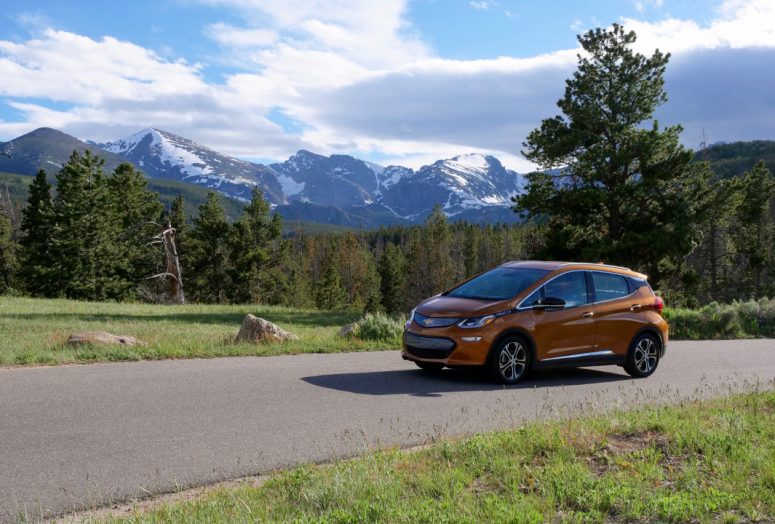
 While on vacation this summer, my family stayed at a Hampton Inn in Gallup, New Mexico.
 Get happy yourself. How happy you are dramatically affects how happy and successful your kids are. So plan time each week to nurture your own relationships and hobbies.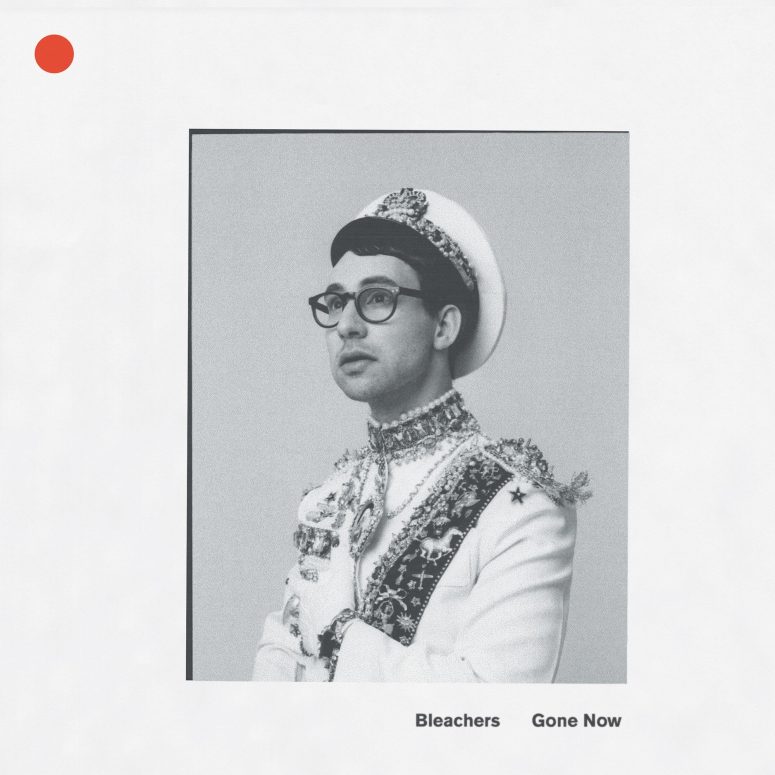

 Via
Via 







 My wife and I were discussing gender equality over lunch today. On a scale of 1–10 (one being female dominate and 10 being male dominate), we both agreed that America today is probably around a 6.5/10 in favor of men.







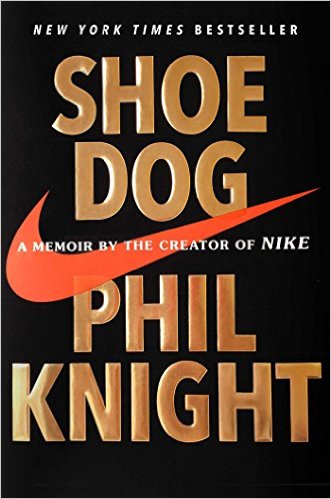 Phil Knight seemingly had a lot of slick editors to help him write